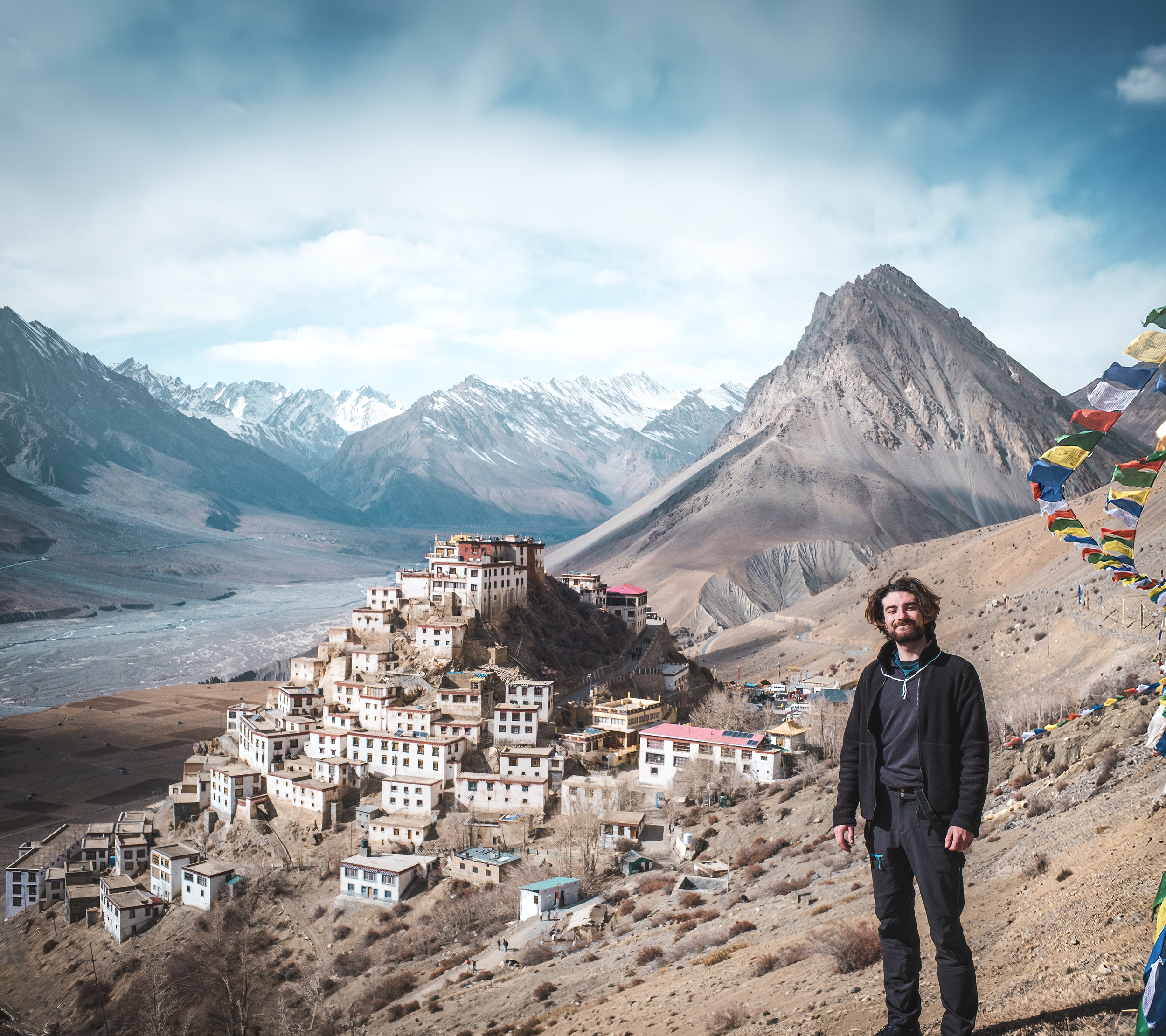
A Journey to Little Tibet
Twelve days in one of the most remote valleys of the Indian Himalayas.
Seeing • Listening • Being
Up there, on the plateaus of Spiti, time expands and silence opens up unexplored space. This twelve-day journey offers an opportunity to listen to your inner voice, reconnect with yourself and discover a simple, demanding and deeply vibrant way of living in the world, inspired by the Tibetan culture of Spiti.
One itinerary,
one intention.

Key points :
Duration: 12 days (excluding flights).
Participants: small group, maximum 8 travellers.
Period: May, June, September, October.
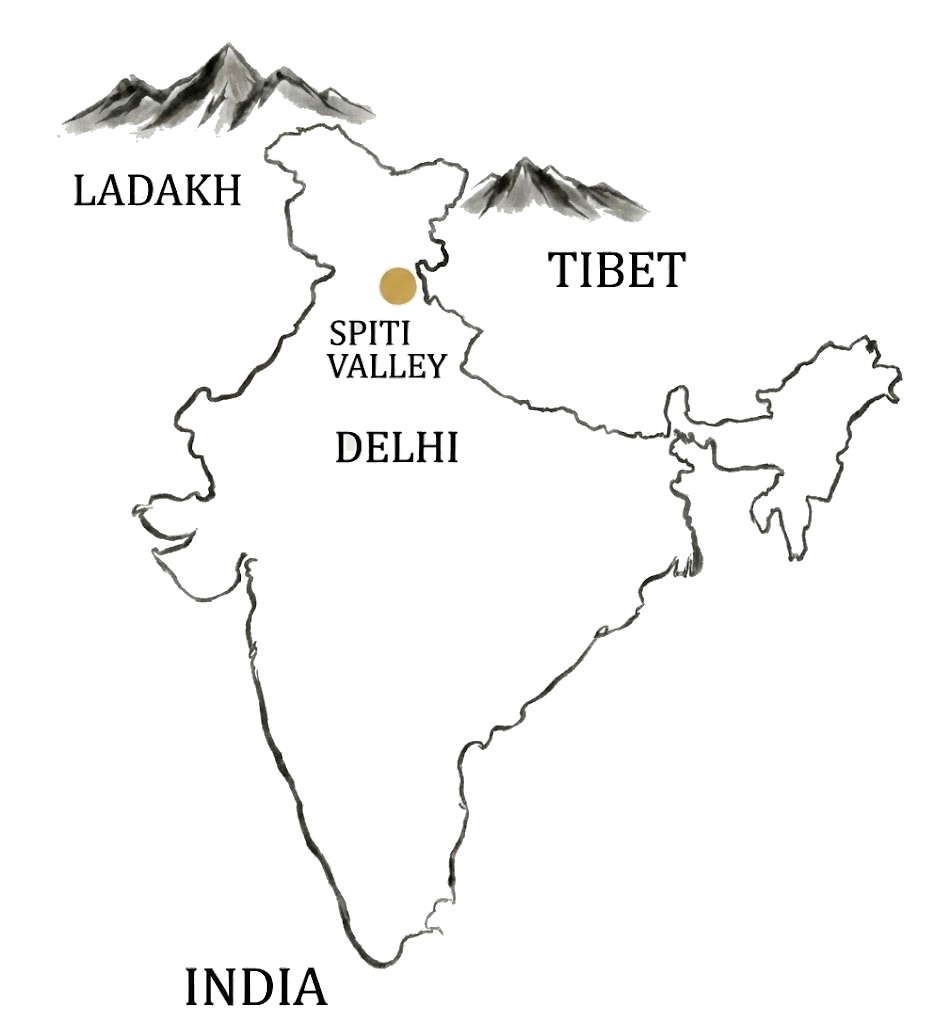
Region: Pin and Spiti Valley, Indian Himalayas.
Maximum Altitude: approximately 4,300 m, gradual acclimatisation.
Level: easy, slow walks, no sporting feats but high altitude.
Accommodation: homestays, monasteries, simple guesthouses.
Supervision: local Ecosphere Spiti team & Les Compagnons du Vent guides.
-
All local transport during the programme.
All accommodation with local residents, in monasteries or guesthouses.
All meals during the stay (breakfast, lunch, dinner)
All activities in which we will take part. (crazy ones!)
Support from the local Ecosphere Spiti and Les Compagnons du Vent team throughout the trip.
Talking sessions (on request), sharing circles, integration time.
Direct contribution to local communities and development projects.
Professional supervision provided by Ecosphere Spiti with safety kit and appropriate mountain protocol.
-
Transportation to Delhi (international/domestic f lights)
Personal insurance (travel & health - suggestions provided)
Personal expenses, tips and individual purchases.
Personal mountaineering equipment (recommended list provided before departure)
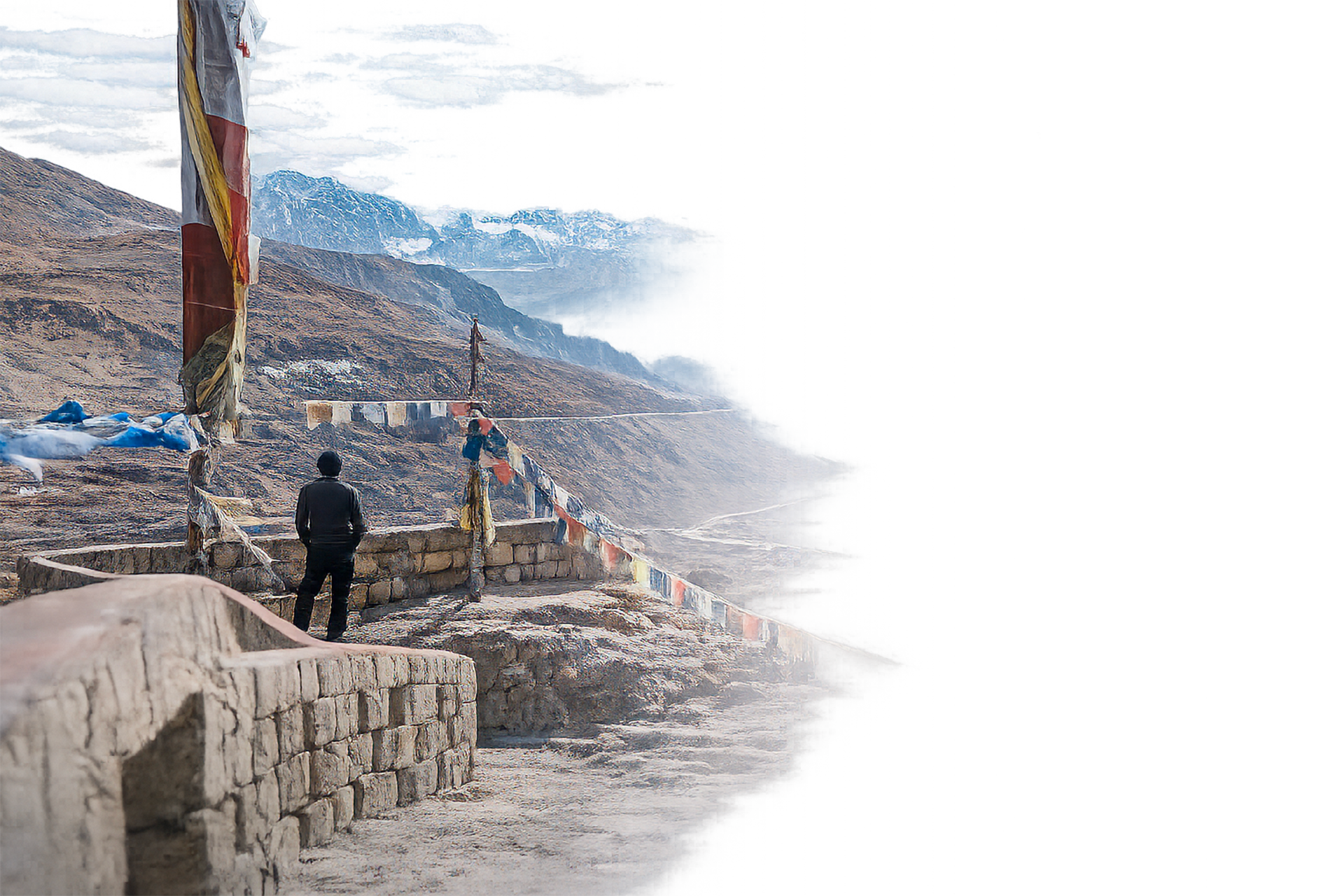
“Travel is a gateway through which we escape from familiar reality.”
• Alexandra David-Néel
the experience :
I loved the Spiti Valley, sometimes called the middle land.
Being there felt like entering another world, one where I could finally slow down and think clearly about my life, my choices, and the people I love.
What surprised me most is that it didn’t stop when I left : weeks later, it was still with me, as if something from that place kept arriving, raining onto me, day after day. It felt simple and deeply warm.
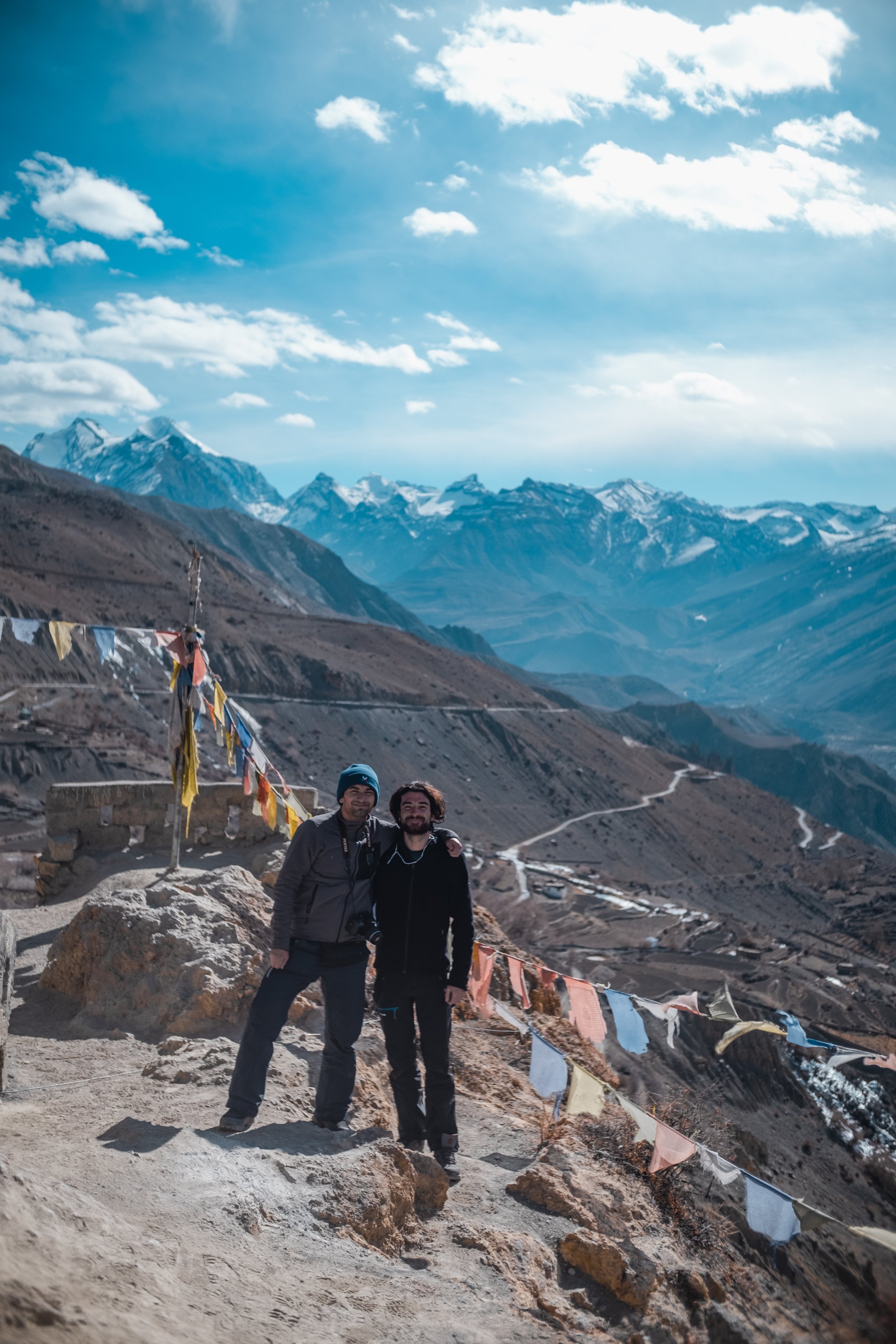
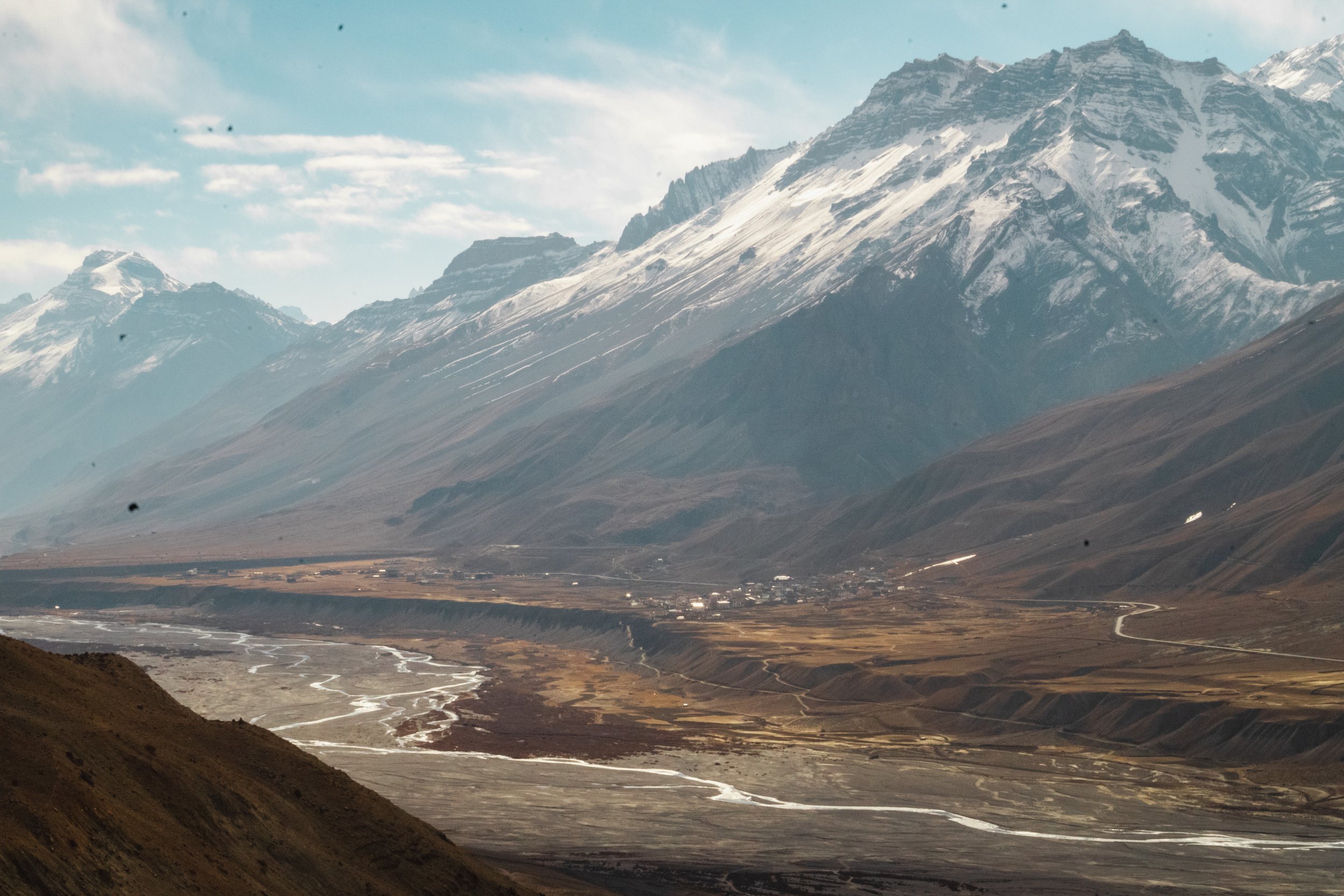
In the Pin Valley, the landscape is wide, dry, mineral. The wind is soft. In May, the valley changes, flowers appear, green returns, and Pin becomes what locals call the valley of five colors.
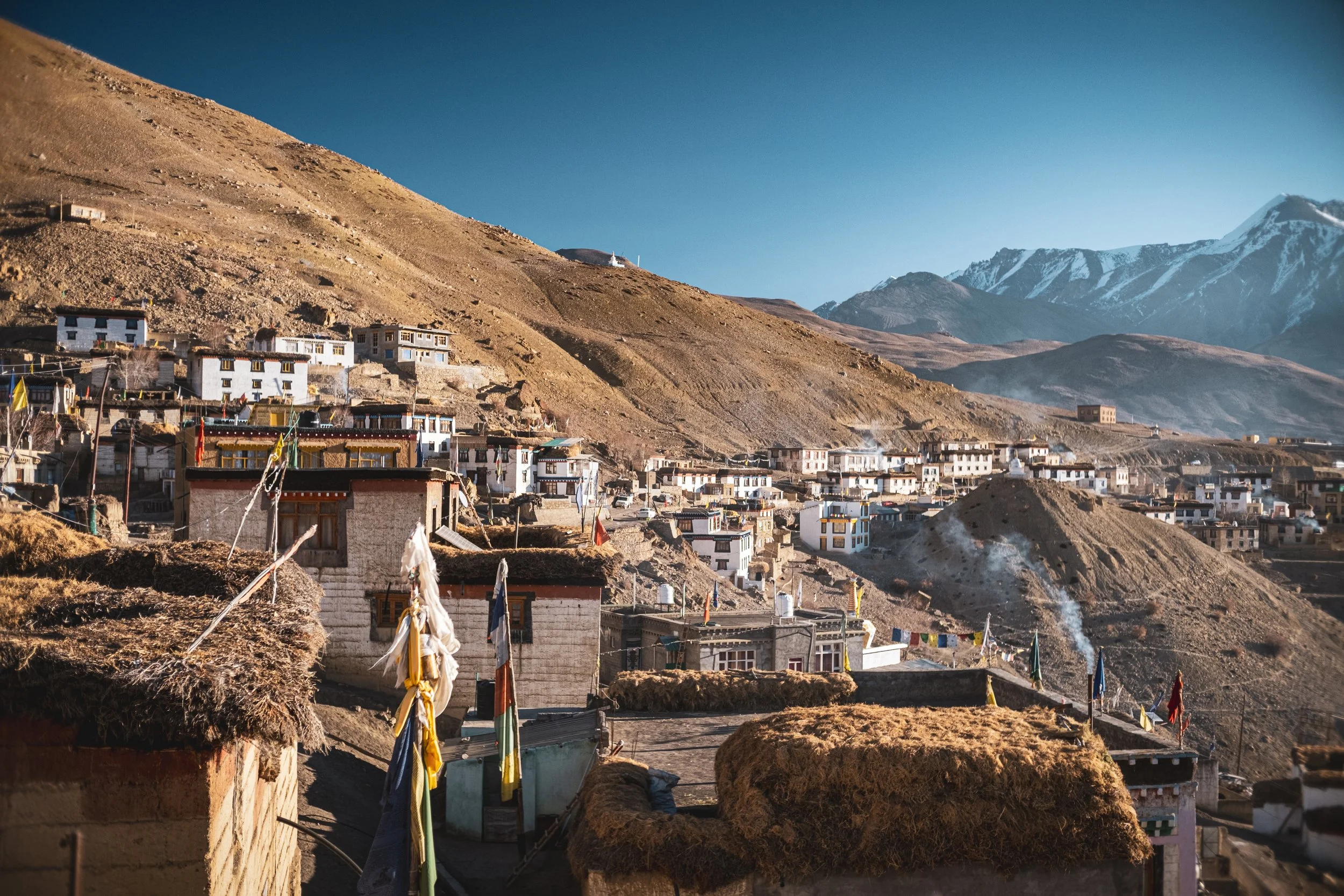
Around the village of Mudh, houses and barley fields rest at the foot of pale mountains. Life moves slowly there. We walk, visit nearby villages, share tea with the families who host us, eat together, talk for a long time. We wander, write, visit monasteries, walk alongside yaks.
Slowing down there is the natural pace of life.
The silence, the simplicity, the openness of the landscape create space to breathe, to let things settle, to see anew.
the itinerary :
-
Transfer to Kalka, then board the charming UNESCO-listed Toy Train to Shimla. A gentle welcome in the Himalayan hills, sublime landscapes unfolding from a wonderfully retro carriage.
Focus: peaceful arrival, first breaths of altitude.
-
Route via Narkanda and Rampur. First panoramic views of the Kinnaur peaks. A long, demanding drive, best for steady nerves and strong stomachs. End the day quietly in Rekong Peo, a lovely town nestled in the Himalayas.
Focus: acclimatisation, first peaks of the High Himalayas.
-
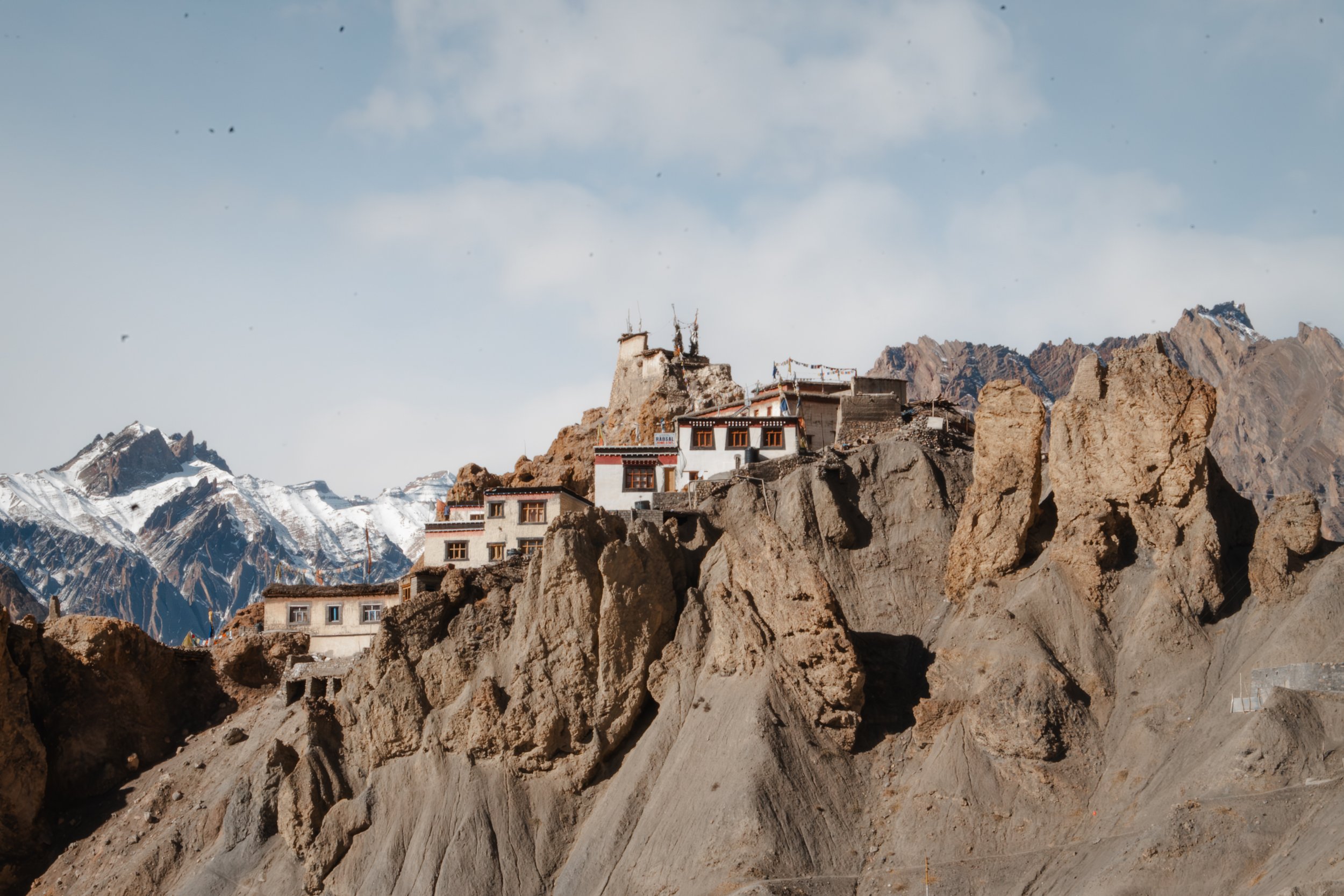
Route via Nako and Tabo, home to the monastery where the Dalai Lama is said to wish to retire. Continue on to Dhankar and fall asleep to one of the most majestic views in the region. Overnight at the Dhankar Monastery guesthouse, the “monks’ hotel.”
Focus: settling in, first immersion in the valley.
-
Visit Dhankar Monastery, then hike up to the lake for those up for a high-altitude challenge. Continue on and settle in at the Hermitage, our home in Pin. A gentle walk around the village, time with the host family, and a sharing circle to close the day.
Focus: rest, listening, writing, ceremony, human connection.
-
A day to reflect and slow down: an optional easy hike for those who wish, and, if you’re feeling brave, an optional cold dip in the river. For those who want to lend a hand, join volunteering activities with local communities: helping with the barley harvest or caring for the animals.
Focus: body awareness, basic immersion.
-
A gentle one-hour walk to Kungri Monastery, followed by a day with the monks and nuns. Lunch with the nuns, then prayers and shared philosophy, with the option of a one-to-one exchange with a nun for those who wish. Meditation together, and a talking circle afterwards.
Focus: silence, house rules, interiority.
-
Early departure for Kee Monastery to visit this remarkable site. Hike to the viewpoints, then a meditation session within the monastery. Afterwards, drive to Langza for a hands-on local pottery workshop. Sleep in Demul.
Focus: integration, listening to others, open-mindedness.
-
In the morning, learn how to make local yak cheese, then spend time observing and sharing with local knitting women. In the afternoon, enjoy an individual session with an Amchi, physical and spiritual healing with a kind-hearted practitioner named Norbu.
Focus: returning to calm, gratitude.
-
Morning hike alongside yaks to a beautiful viewpoint overlooking the convergence of the valleys. Return to the Hermitage to prepare a meal together, then enjoy personal time for rest, meditation, and journaling.
Focus: listening to oneself, calmness, observing recent experiences.
-
A day to refocus and take stock of the journey, making peace with the changes ahead, speaking about what awaits us on arrival, and the responsibility we carry toward ourselves. In the evening: local folklore dancing and the Bunchen ceremony, with truly local, exciting surprises along the way.
Focus: retrospective, grounding, contemplation of change.
-
Morning with the families, farewells and departure for Raison.
Focus: descend slowly, keep the spirit of Spiti alive.
-
Route back to Delhi.
“In this place where time seems to have stood still, one has the impression that everything is moving. Including oneself.”
• Heinrich Harrer
the journey continues…
For those who wish, the journey can continue afterwards for as long as you like. Many travellers choose to extend the experience and keep exploring northern India, places like Dharamshala or Manali, while others may decide to head to Nepal. There, we’ve been invited by the NGO of Matthieu Ricard to visit their monasteries and share daily life with the monks, who have expressed genuine support for our project.
I will personally stay with the group to continue this journey together, not only as fellow travellers, but as companions and friends. Please note that this extended part of the trip takes place afterwards and is entirely at our own expense.
Silence is where
things begin.

the spirit & the framework :
This trip is for those who want to :
Escape the hectic pace of everyday life.
Experience an unforgettable adventure in the heart of Himalaya.
Really slow down, far from noise, screens and obligations.
For people who are ready to spend time with themselves.
Share twelve days with a small group (8 people max) in an atmosphere of trust and selflessness.
Discover Spiti and its culture with respect and attentiveness, without a checklist or spectacle.
No posture to adopt, no performance to prove: just the willingness to be there, together
What this means in practical terms :
Simple comfort: homestay accommodation: simple and welcoming spaces, sometimes with shared rooms (option for individual), basic toilets and restricted electricity. Hot water can be limited two of the nights.
Altitude & walking: slow walks, moderate trails at altitude; a minimum level of physical activity is recommended before departure. (physical preparation programme included :)
Presence with others: shared meals, circle time, respect for silence when suggested, kindness within the group.
Respect for the surroundings: modest dress, discreet behaviour in monasteries, no intrusive staging for social media.
Material simplicity: limited luggage, no excess, careful use of water and waste.
How we supervise it?
Trip co-designed with Ecosphere Spiti, a local agency, and with communities in the region.
Experienced local team for logistics, road travel and high altitude.
Itinerary designed for gradual acclimatisation and the possibility of adjusting the pace.
Les Compagnons du Vent support focused on listening, discussion and quality of presence, never on performance.
For what purpose?
(This list is not exhaustive; we welcome all your wishes)
Reconnect with your feelings, your emotions, your inner flame.
Clarify who you really are, deep down.
Enjoy a rare and memorable experience that will last a lifetime.
Heal your relationship with certain parts of your past.
Share powerful moments and forge authentic bonds.
Allow yourself to dream and pursue what truly inspires you.
Let yourself be guided towards the unknown with confidence.
Step outside your comfort zone.
Experience intense, full and vibrant joy.
Take a step back and gain perspective on your life.
Learn to let go and live fully in the present moment.
Make choices that are aligned with your future.
Take action and observe a change in your life.
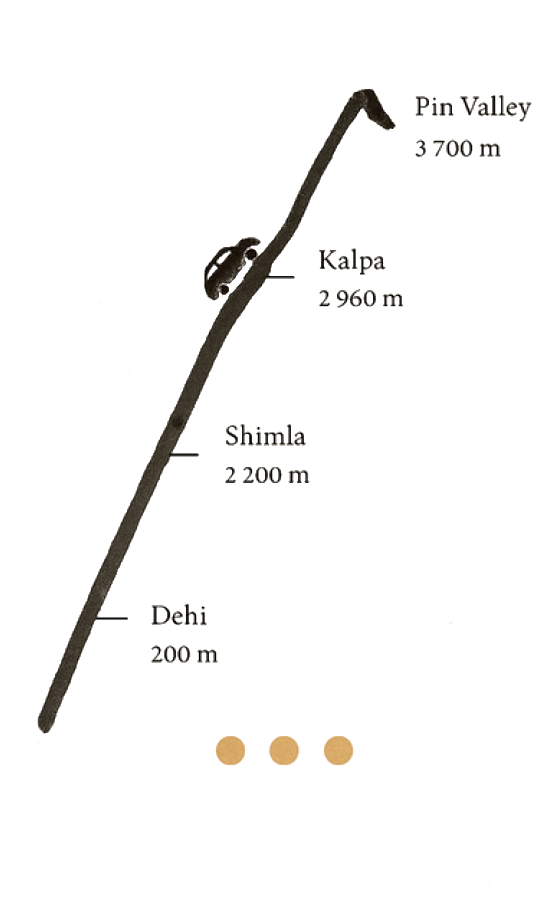
altitude : a controlled elevation
Spiti is a high-altitude region, but our approach is gradual and progressive.
We ascend in stages — Delhi → Shimla → Kalpa → Pin Valley — allowing the body time to adapt naturally. This slow ascent is key.
Ecosphere Spiti, who have been accompanying travelers in the region for over twenty years, confirmed it to us: they have never experienced an altitude-related incident when following this progression.
There is no secret to acclimatization. We move slowly, drink regularly, and listen to the body.
On site, our local guides are trained, experienced, and well equipped. During my own time in the valley, I had no serious issues and took no medication for altitude. The first nights brought vivid dreams, and occasional light headaches appeared when we walked too fast, a simple reminder to slow down. Once we adjusted our pace, everything settled naturally.
Should any discomfort persist, a medical centre is available in the valley, accessible without helicopter evacuation or complex logistics.
For those who know they are more sensitive to altitude, preventive medication can be considered in consultation with a doctor. Most travelers won’t need it, but it can offer reassurance for those who prefer an extra layer of caution.
Altitude is part of the journey, and we meet it with respect, experience, and care.
the call of the wild :
This trip can be an opportunity to:
Share twelve days with people you would never have met otherwise, and perhaps forge long and strong friendships; learn about a selfless way of life;
Discover a different relationship with time, work and performence by observing life in the villages of Spiti;
See the world you know from a different, broader and more nuanced perspective;
Experience a sense of lightness: walking, laughing and learning without having to ‘make the most’ of every moment.
It's not necessarily about ‘changing your life’ or having a great revelation. It's primarily about offering yourself a solid, beautifuland simple break, during which you can relax, rest... and perhaps open yourself up to another way of living your life.
We also come for the call of adventure. To feel the rucksack on our shoulders, the morning chill on our faces, the dust of the trail on our shoes. To walk until our thoughts fall silent, to laugh over a simple meal, to lie down exhausted but happy, under a sky we had only seen on maps. Leaving behind screens, appointments, obligations, and saying yes to a few days of real life outdoors, high in the mountains. Sometimes, leaving is just about accepting to let yourself be carried away for a few days, home is where the heart is at peace, rather than where it is safe.
practicals:
Walking:
~2 hours of walking per day depending on the activities.
All walks are optional: you can stay around the house, you are free to do as you please.
For thinkers who like to walk.
There are opportunities for long hikes (ridgeways, side valleys, greater elevation) throughout the trip, the local guide can take those who want to go further.
I will stay with those who prefer a gentler pace or rest.
Terrain & altitude :
Altitude between 3,600 and 4,400 metres, with gradual acclimatisation.
Accessible if you are a regular walker and listen to your body.
Logistics :
Lightweight day pack: the rest of your belongings will remain in the village.
Emergency and medical equipment will be provided by the local team.
Spiti, a Tibetan sanctuary:
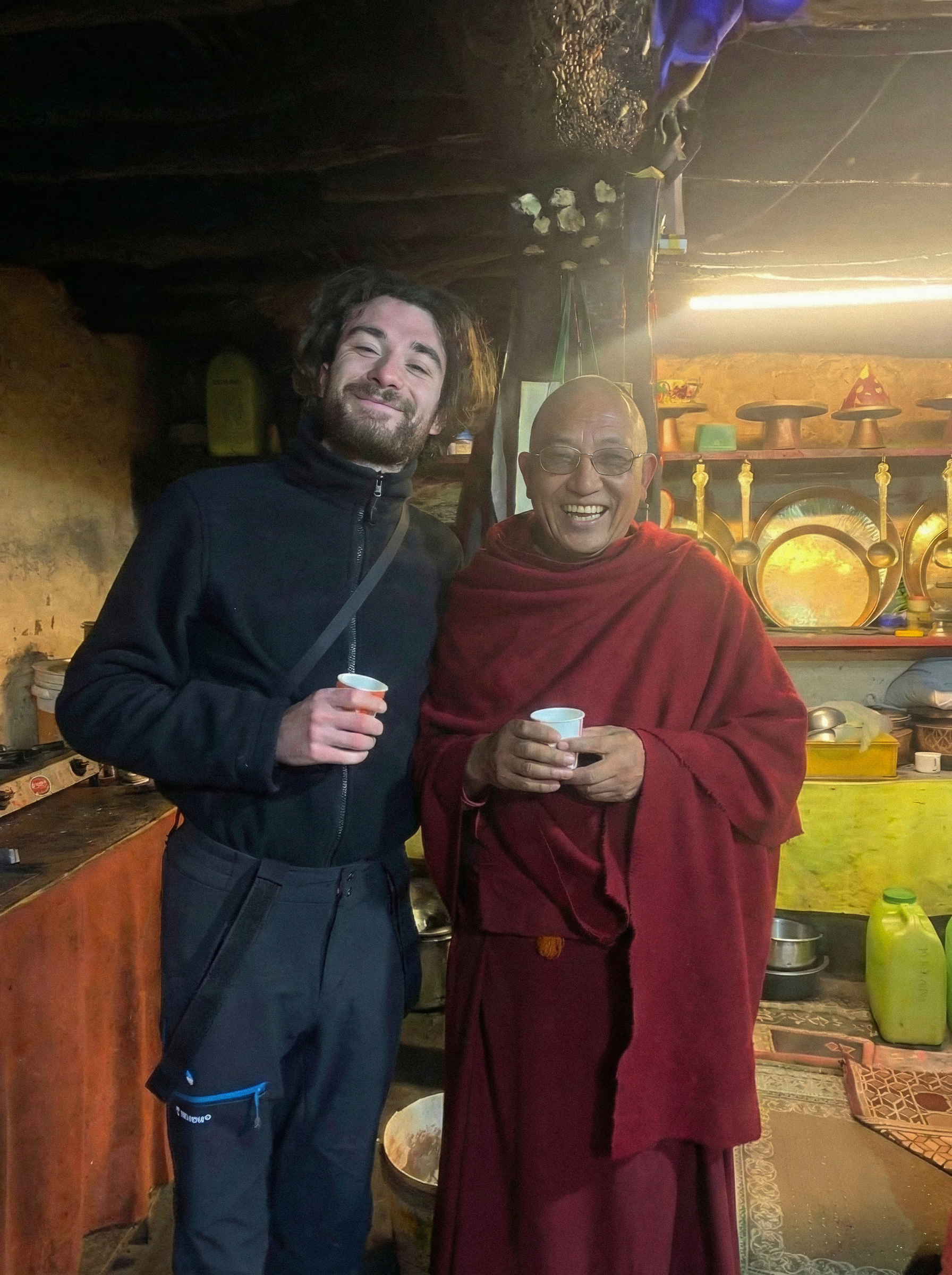
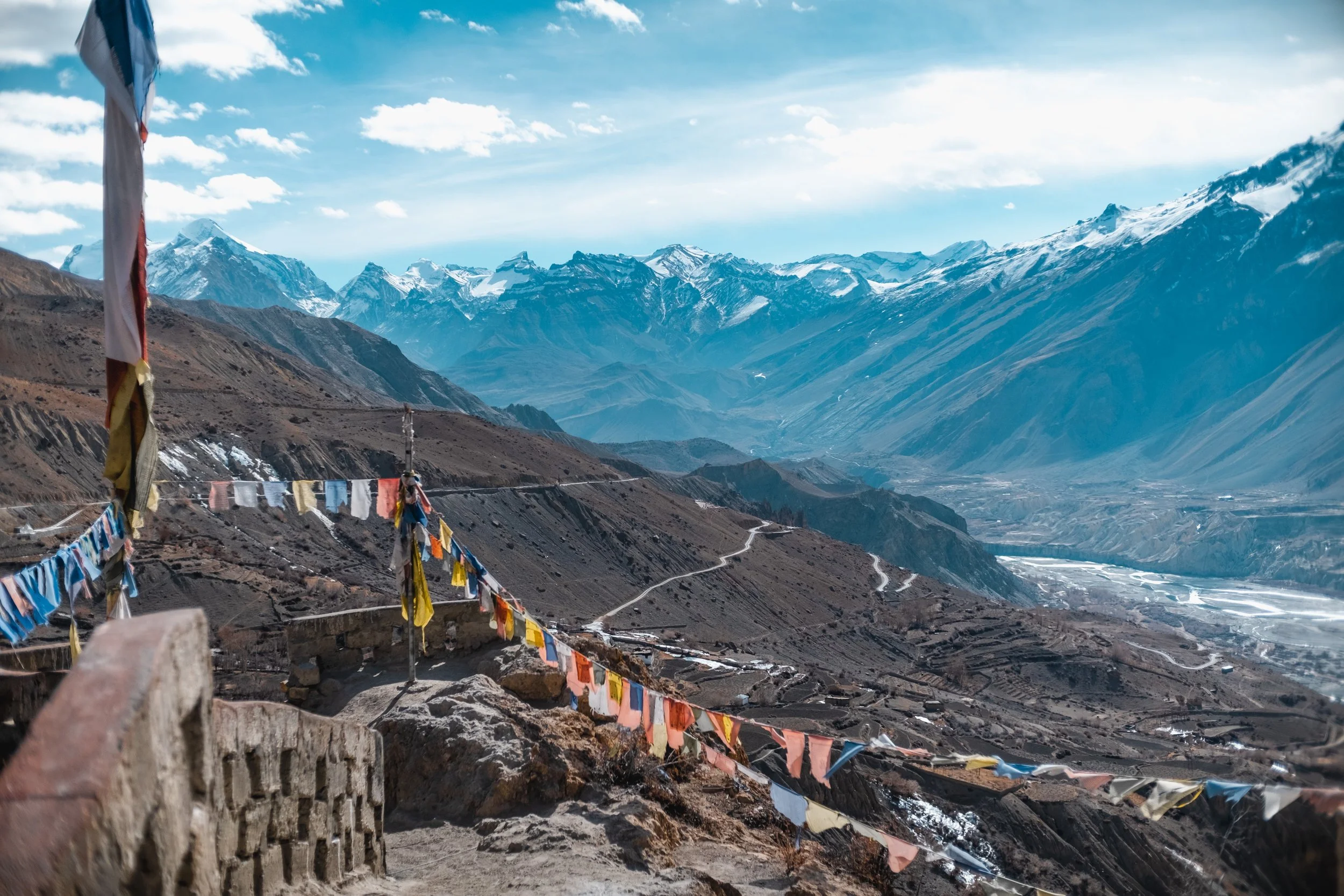
Spiti is a high-altitude desert, all jagged peaks and vast, dust-colored horizons. I’ve spent time there drifting through villages where the concept of a "stranger" feels obsolete. People invite you in for tea without a second thought. You find yourself tucked away in a sun-drenched living room, sharing a bowl of snacks and a few words. Sometimes, you don't say much at all. It’s a strange, easy familiarity; it feels as though you’ve known these families for years rather than minutes.
a different kind of architecture :
One thing that stopped me in my tracks is the open-door policy. Many houses are simply left unlocked. When the Himalayan cold bites too hard, anyone can step inside, brew a pot of tea, warm their bones by the stove, or even cook a meal before moving on, even if the owners are miles away.
That level of radical trust changes you. It changes how you move through a place, and more surprisingly, it changes how you move inside yourself. You start to drop the armor you didn't even know you were wearing.
a kingdom preserved in amber :
This "familiarity" is rooted in a very deep, very old survival story. Between the 9th and 11th centuries, when Lhasa was torn apart by civil war and the collapse of the Tibetan Empire, nobility and monks fled west. They founded the West Tibetan Kingdoms (like Purang-Guge), turning these high valleys into a sanctuary for their culture.
Because of its sheer isolation, Spiti has remained almost entirely untouched since those exiles first arrived. Stepping into these villages feels less like travel and more like time-travel:
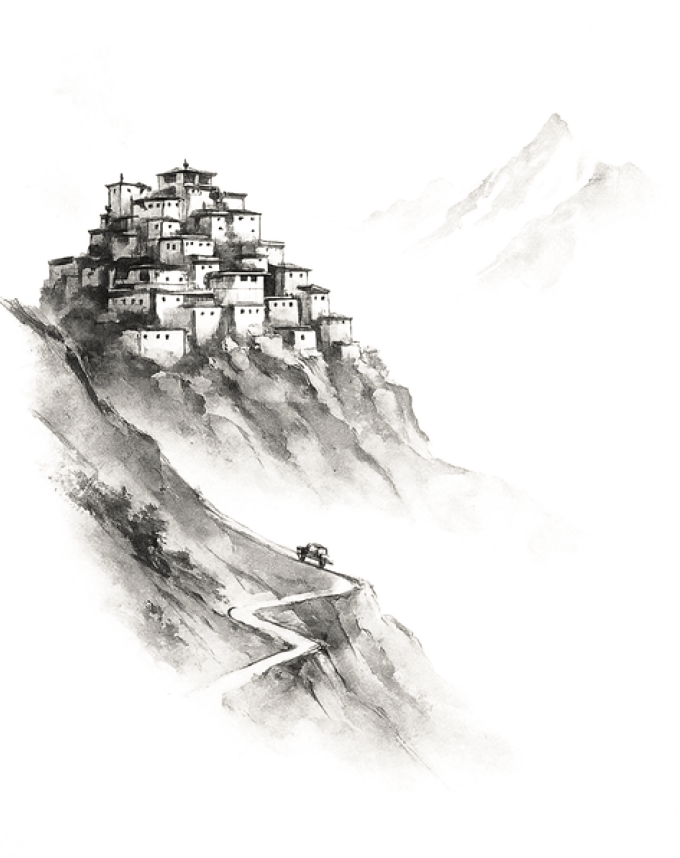
Key Monastery: Standing before it, you see a "monastery-fortress" that has survived Mongol invasions and earthquakes. It looks like a cluster of white houses piled precariously on a hill, a beehive of faith that has been buzzing since the 11th century.
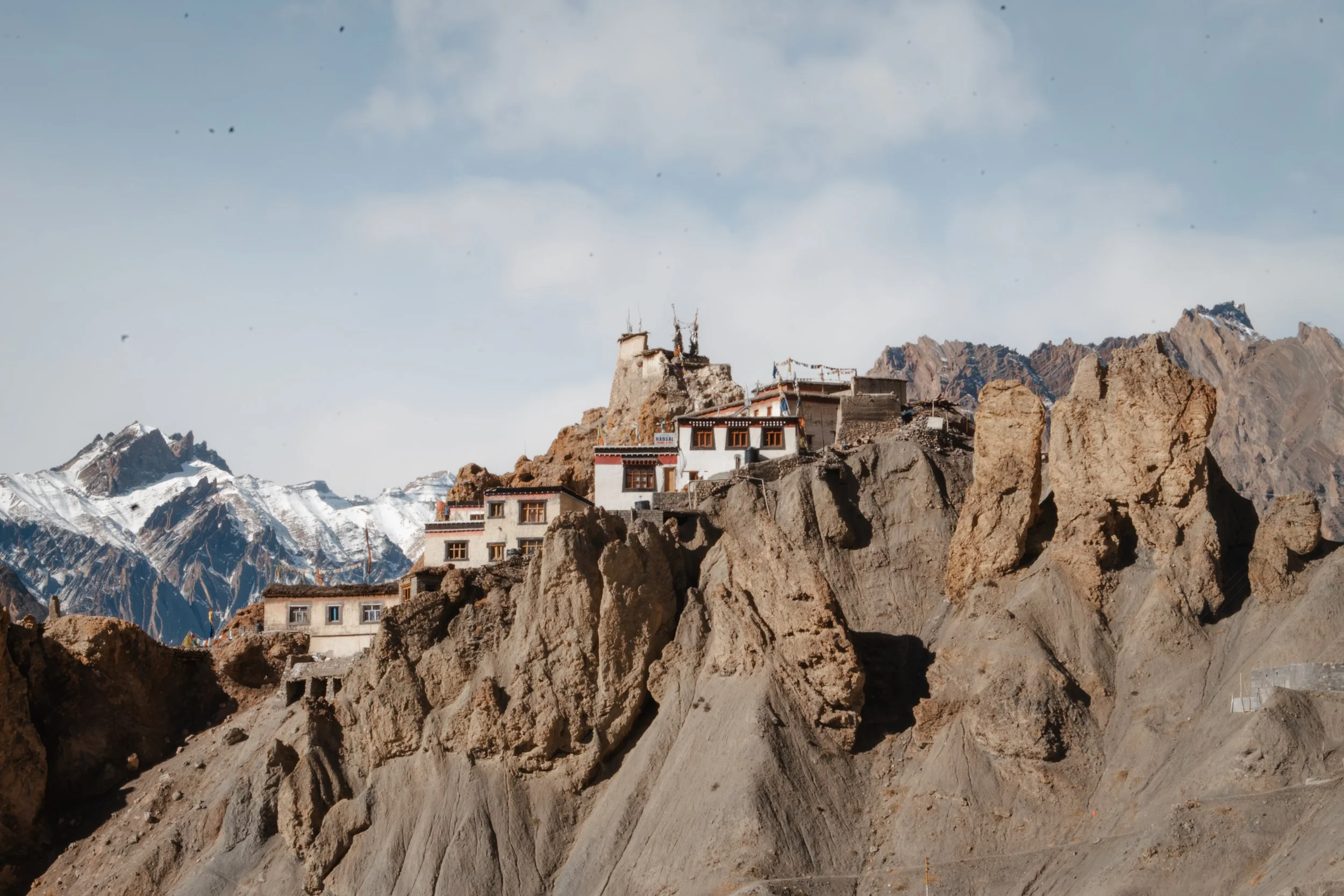
Dhankar: Perched on a razor-sharp cliff, the old capital of Spiti looks like it’s growing out of the rock itself. Looking down from the crumbling walls. It was home to the exiled kings and the keepers of Tibetan life.
the valley of cousins :
Because of this shared bloodline, Tibetans exiled today do not see a foreign land; they call it "The Valley of Cousins."
This kinship is felt in the radical trust that defines the valley, the unlocked doors and the tea shared with every passing stranger. It is a culture kept in a high-altitude time capsule, remaining one of the few places where Tibetan life continues outside of Chinese rule. In Tabo, they say the Dalai Lama chose this village for his retirement because it is the only place that truly feels like home. Looking at the ancient murals, I finally understood why.
Wandering through these settlements, I felt a slow dismantling of my own rhythm. The frantic tempo of my European life, the relentless march of "necessities", began to feel distant. Here, the weight of Western dictates seemed to dissolve in the thin air, replaced by a recalibration of what actually sustains the spirit and the body.

A break… to come back stronger.
This journey is a rehearsal for re-entering the world with a different heart.
We currently live immersed in a permanent flux of alerts and opinions that saturate our attention and slowly erode our capacity for reflection.
This exhaustion is structural. It is the deliberate product of systems that demand constant availability and performance while offering fewer shared horizons of meaning.
To step aside is to regain a necessary distance. It is an act of reclaiming perspective from hyper-connectivity and the silent internalization of pressures that were never meant to be carried by a single person.
What we often mislabel as personal failure or anxiety is actually the natural expression of a world organized in such a way that exhaustion becomes the norm.
By seeking meaning far from the rush of Europe, I am forced to face an uncomfortable question: what does it say about Western societies that they struggle to produce their own spaces of slowness and depth? This "elsewhere" is far more than a resource to be consumed or an ideal to be worshipped. It is a mirror. It reflects both our deepest longings and our ultimate responsibility to live differently once we return.

Sharing, togetherness, and the act of encounter serve as tools for cultivating an awareness that loosens the grip of crisis from the inside. These movements pull experience out of the abstract and return it to the body, allowing the truths obscured by speed and noise to be felt once again. From this stillness, one returns not "fixed" or resolved, but with a perception that has finally been cleared of the distractions.
This movement is a path toward re-engagement rather than withdrawal. These moments of disconnection are a vital preparation, a way to eventually meet the world again with steadier ground, sharper attention, and a more deliberate sense of how to participate in it.
-
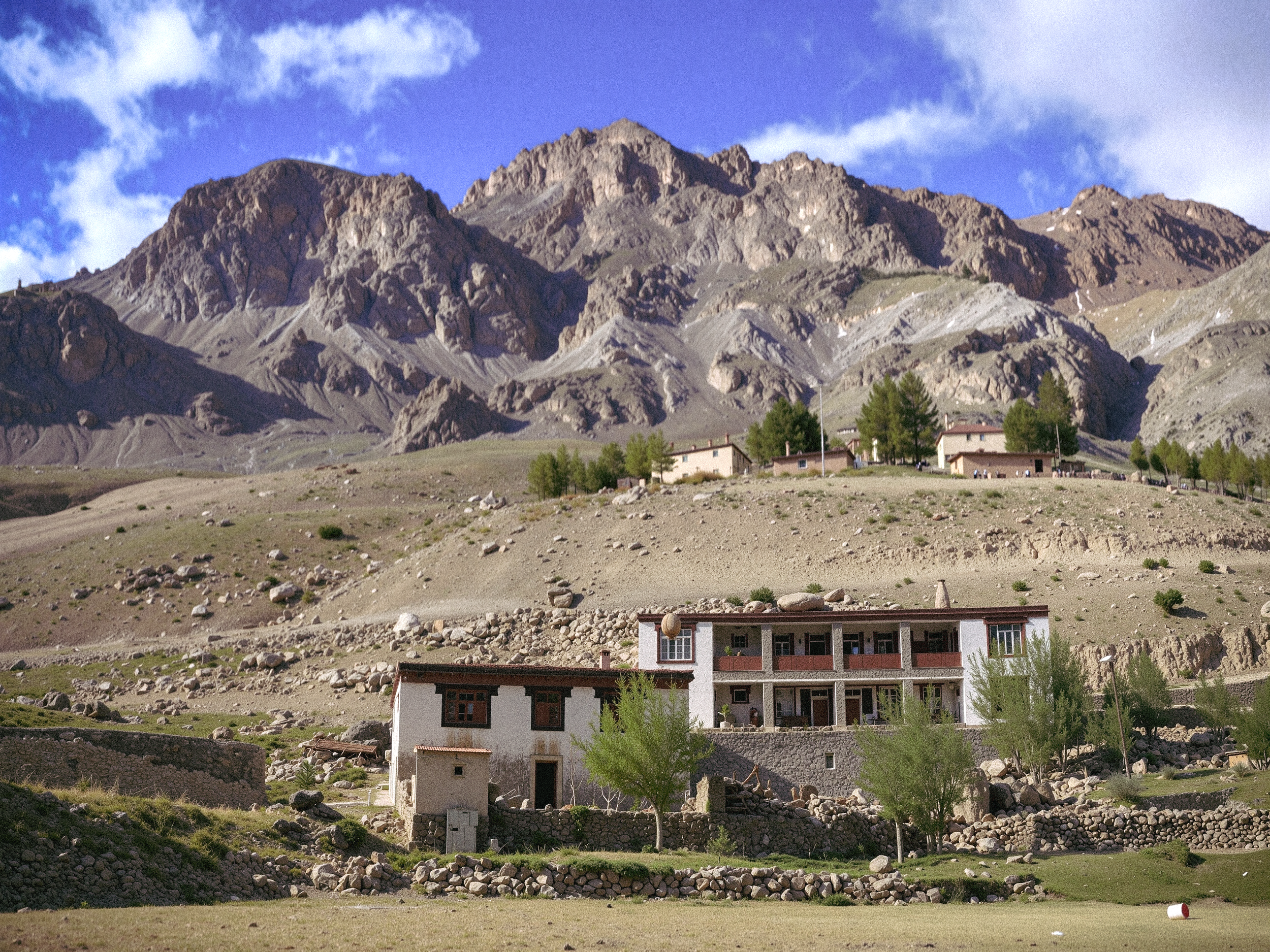
Hermitage, our stay in Pin Valley.
-
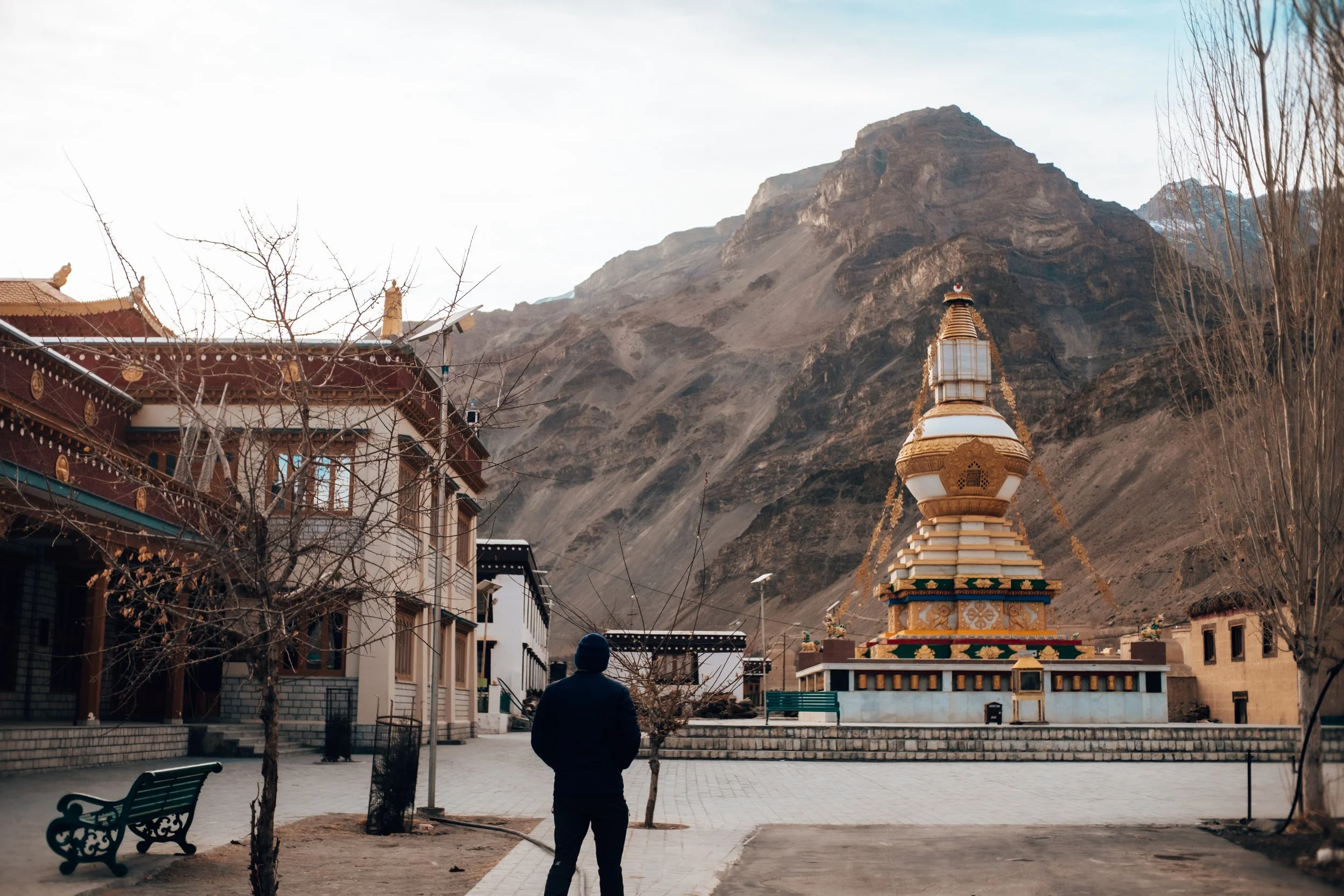
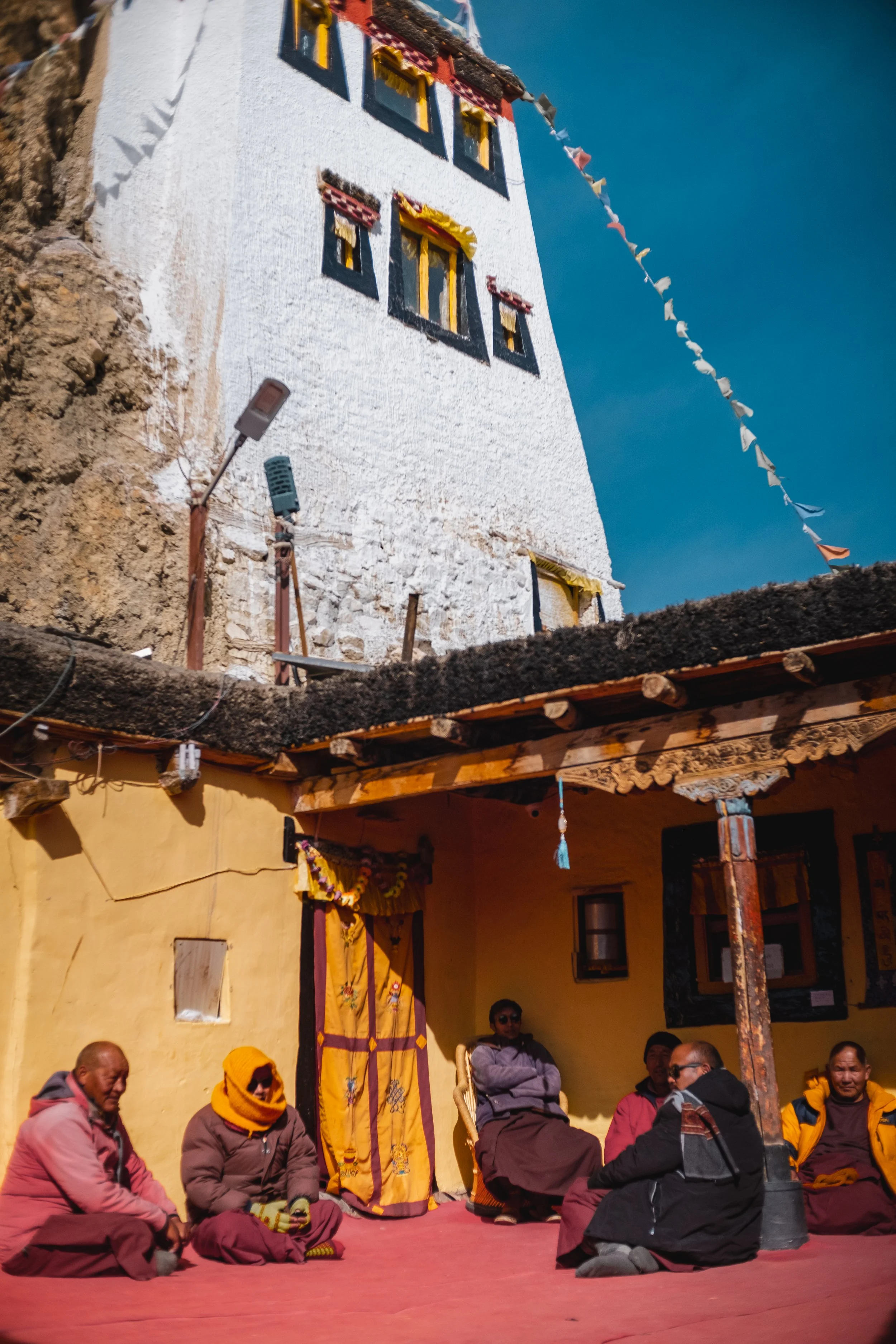
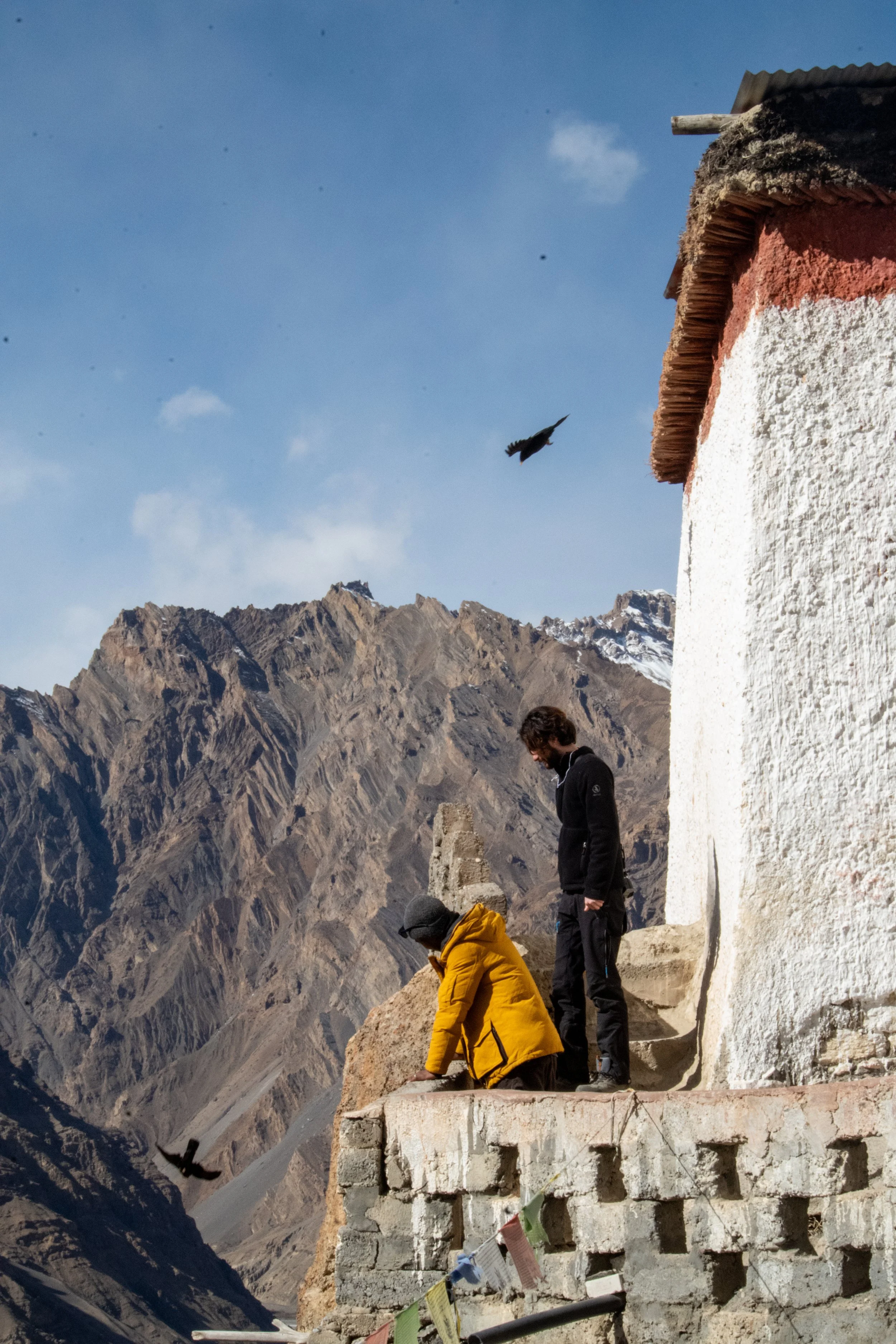
Tabo Monastery, founded over a thousand years ago.
-
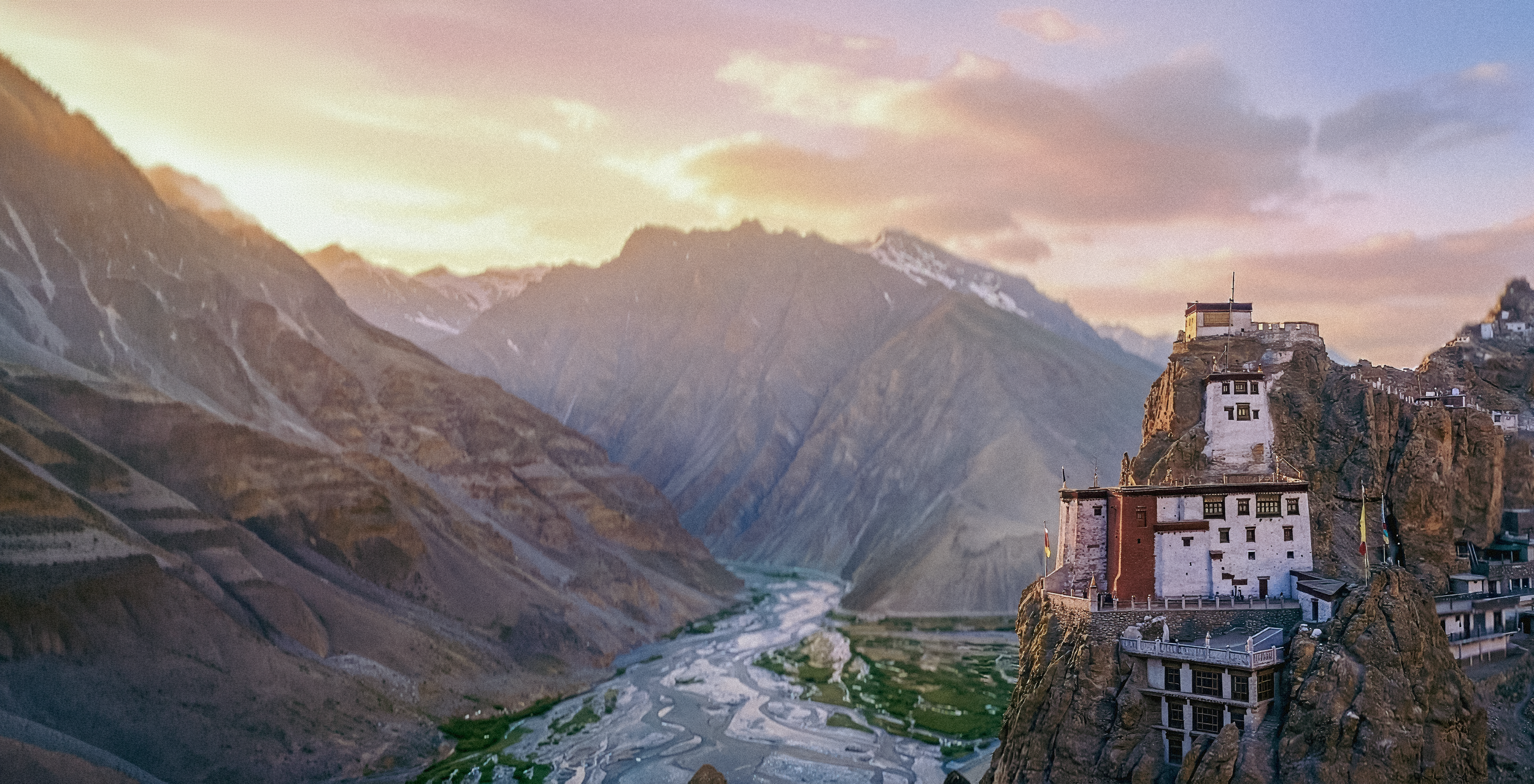
Dhankhar Monastery, home to exiled Tibetan kings.
-
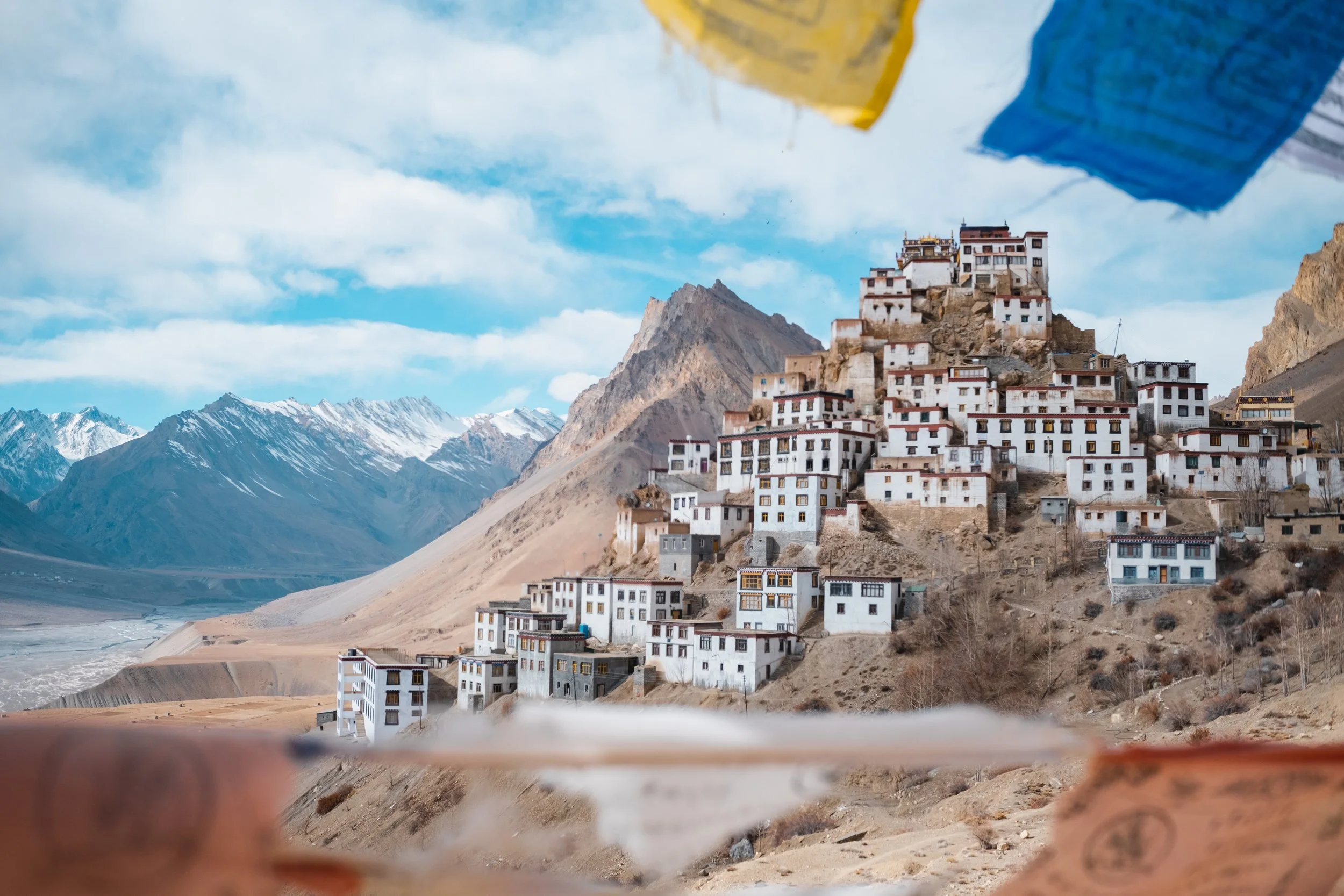
Kee Monastery, where I felt the freedom of centuries of meditation.
-
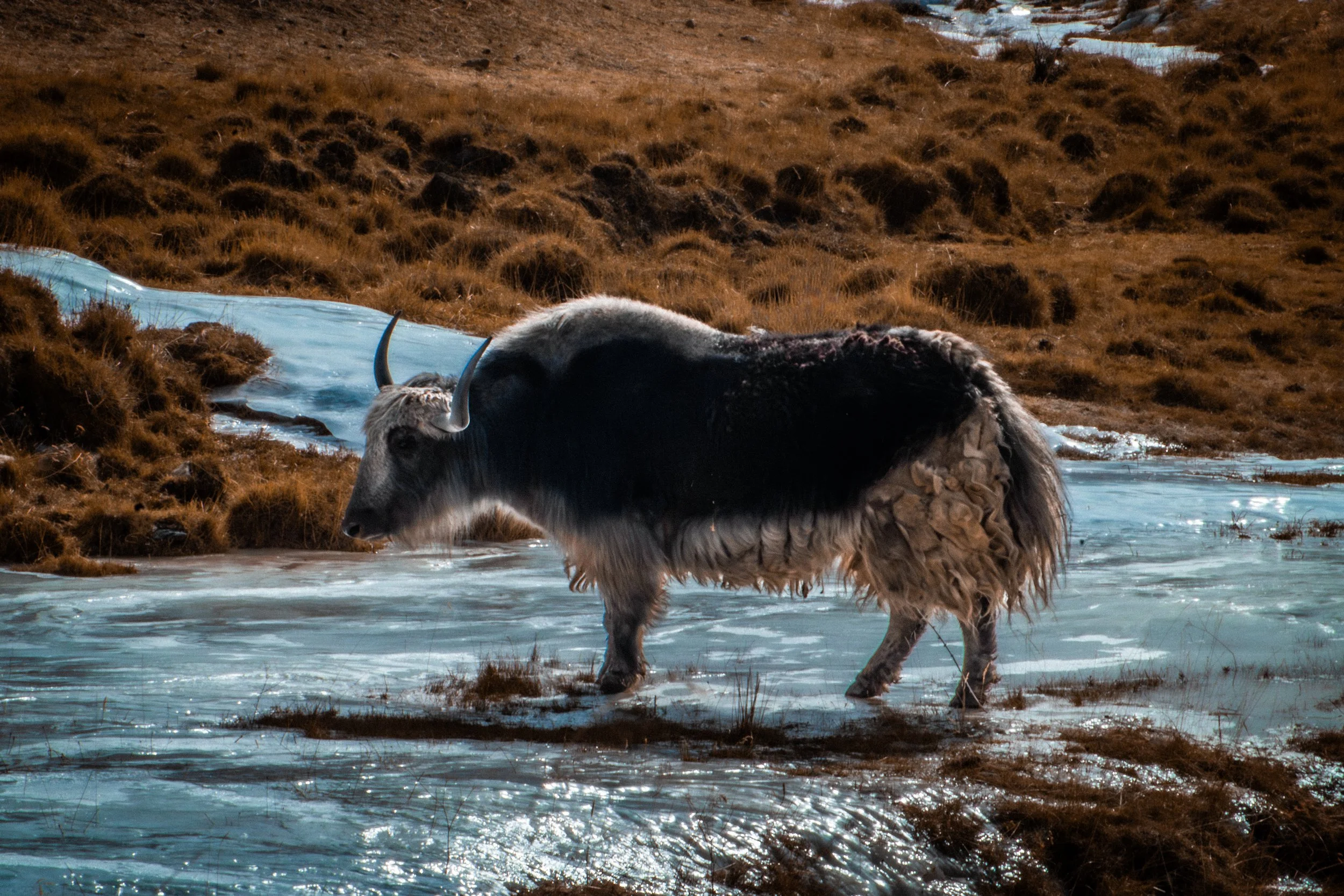
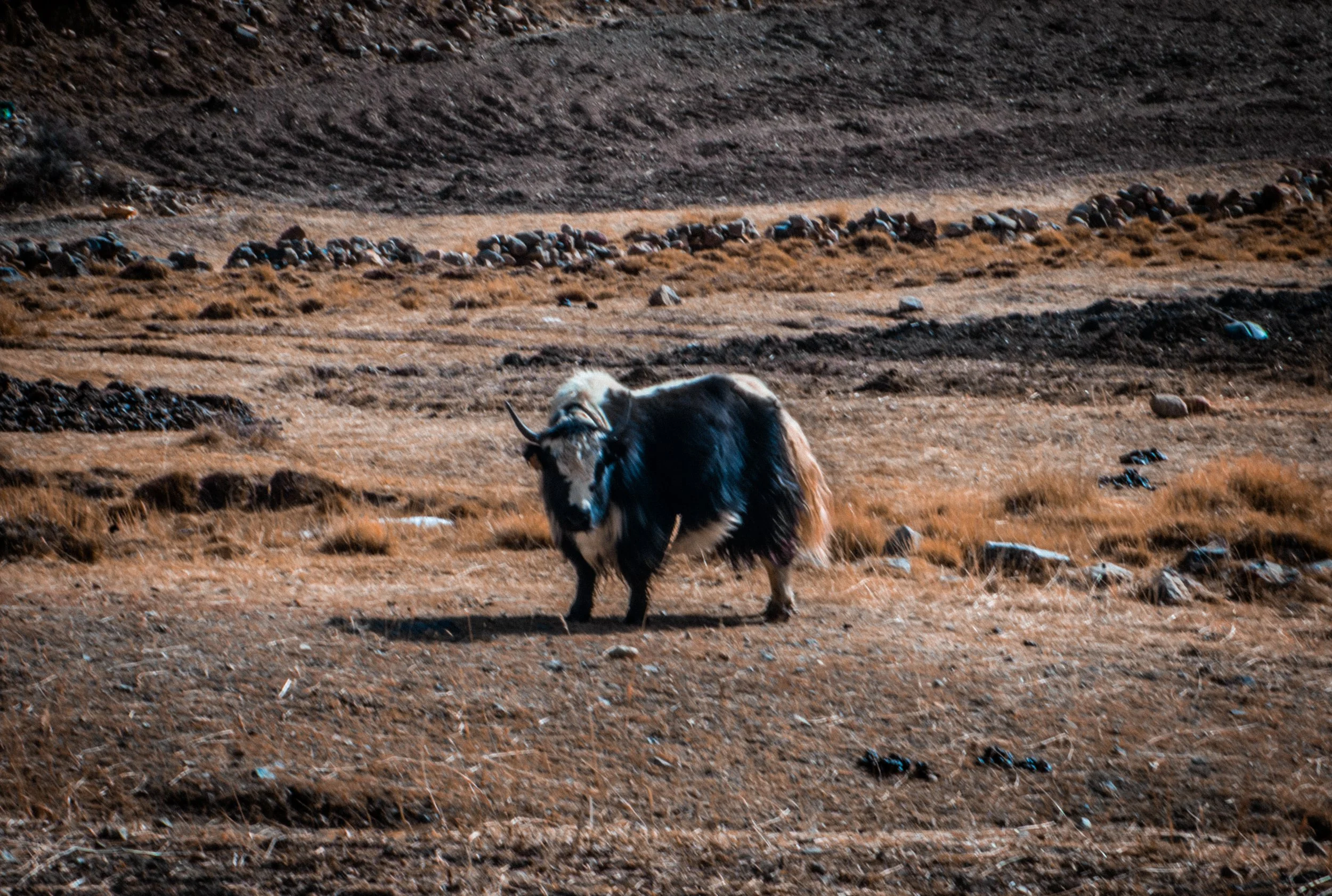
Yaks, living at altitude for millennia, undisturbed by time.
-
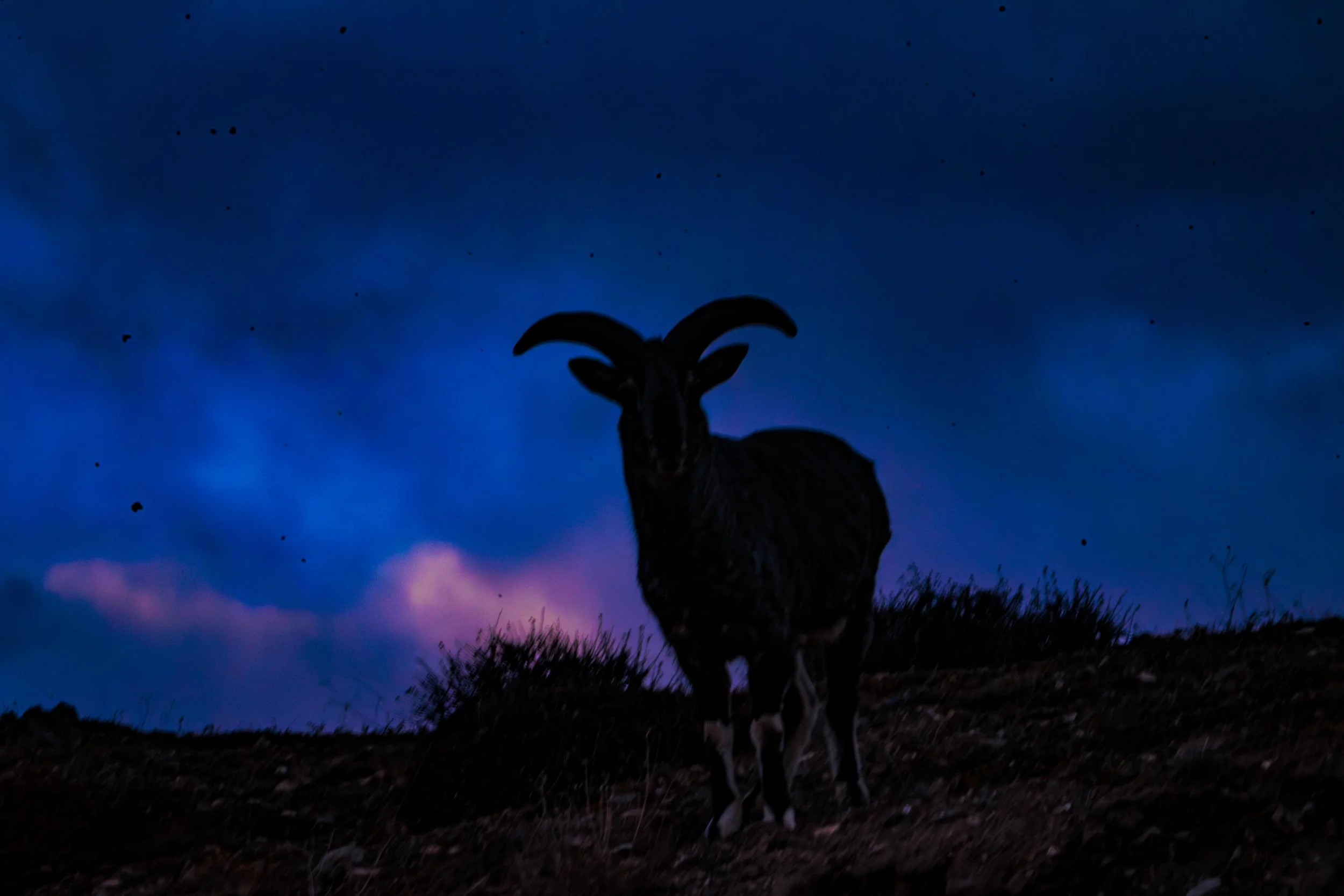
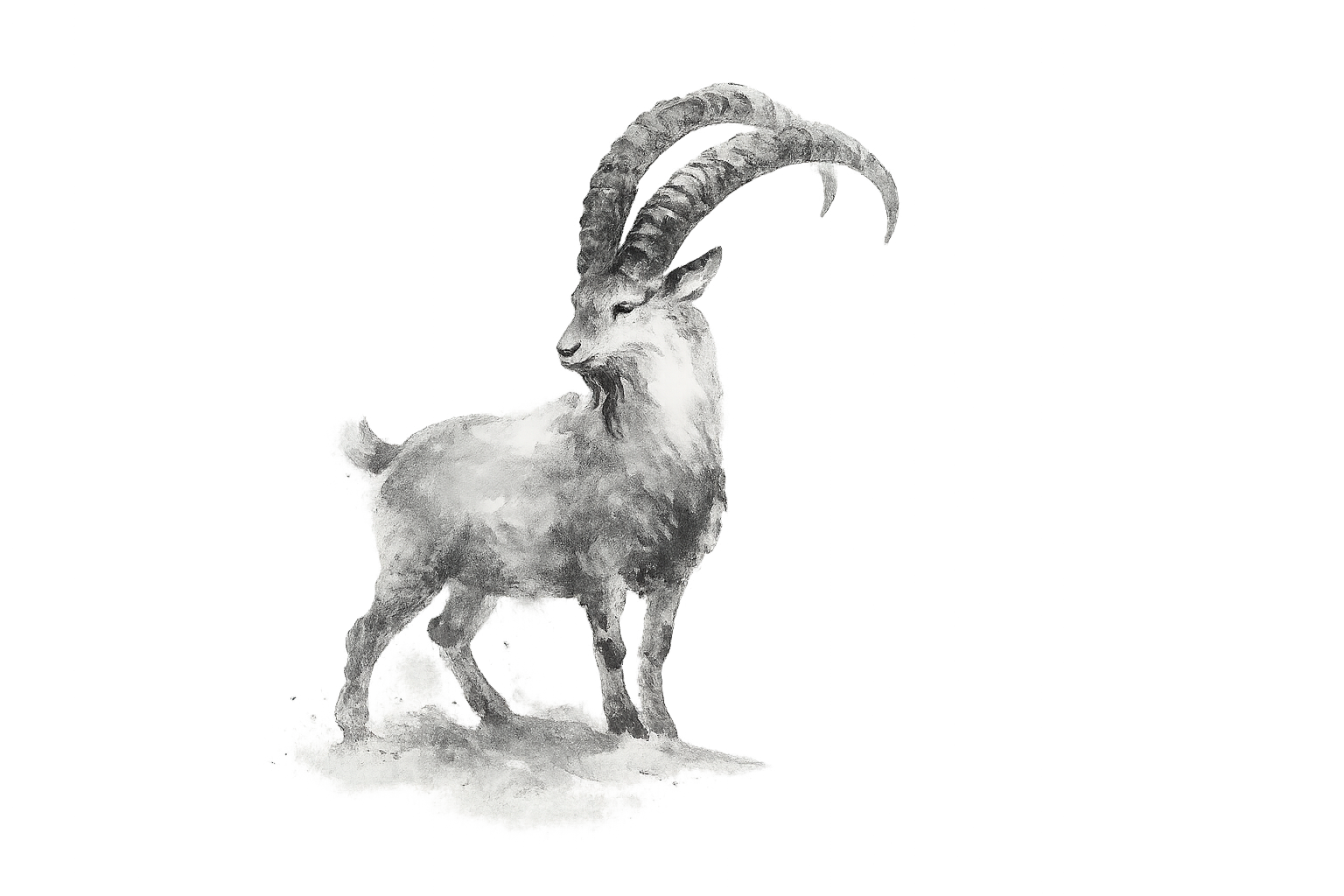
A blue sheep at nightfall.
accompaniment
three stages of support :
This journey does not begin in the Himalayas. It begins long before departure, gently, at home, so that you arrive there with your body and mind already open.
interior preparation :
A month and a half before the trip, we invite each participant to obtain a travel journal, a private space for reflection and self-reflection.
We will invite you, with simple questions, to set your intentions:
Where am I today?
What would I like to understand, heal, rediscover?
What am I looking for within myself, in silence and walking?
This is not a spiritual or therapeutic exercise, but a moment of clarity before departure. This notebook accompanies the traveller throughout the expedition, to record feelings, thoughts, images, dreams...
physical preparation :
A light and motivating programme, designed by a coach specialising in gentle preparation, is offered a month and a half before departure.
A few simple exercises to do at home or outdoors, without equipment: mobility, breathing, endurance. The aim is to start re-acclimatising your body, getting used to small efforts, altitude and regularity.
Our coach will offer personalised support on request in order to adapt to your needs and answer your questions throughout your pre-trip preparation.
evening ceremonies :
Six ceremonies will take place throughout the journey, in small circles, over a cup of hot tea or in the vastness of the mountains. Each explores an essential theme: fear, connection, gratitude, direction, return...
They combine speaking, observation and listening. There is no obligation to participate, participation is open and respectful.
Discussions may continue afterwards, in individual or informal conversation. The method is based on approaches drawn from philosophy, coaching and humanistic psychology: a space to listen to what is stirring within oneself and share it all together.
“True travel does not consist in seeking new landscapes, but in having new eyes.”
• Marcel Proust
return & after
The come back
Weeks after my return, the aftermath of the valley still rains down upon me. I am still falling into myself, still embedded with the knowledge of that high-altitude peace.
What remains is a subtle, persistent shift in how I pay attention, a frequency that hums beneath the decision of the everyday. The final days in the Pin Valley and the stay in Raison were designed to soften this transition, providing the space needed to slow down one last time before the rush of Delhi and the world beyond.
The Compagnons “of the wind” :
Before parting, we come together one last time. A simple closing circle, to share, or not, what has been lived, what we carry with us, and what we choose to leave behind.
After the journey, participants are invited into a shared space, a place to keep writing, exchanging, and staying in touch. From time to time, we also organize small reunions: simple retreats, often by renting a house for a few days, to meet again, walk, talk, and reconnect.
What remains
What you take with you is rarely tangible:
a slower pace, fewer screens, deeper attention.
Faces, landscapes, and conversations that stay alive.
Better questions.
And the certainty that it is possible to live with less, and yet more freely.
Some moments are intentionally kept undisclosed, meant to be lived rather than anticipated.

our values :
A safe space for women.
This trip is intended to be a safe and welcoming space for all women who wish to let go and relax in trust. Even though our trips are mixed-gender, respect is non-negotiable: no discomfort, no ambiguity, no inappropriate looks.
Our community brings together thoughtful, sensitive and caring souls.
Ethic.
We support the communities of the Spiti Valley and ensure fair working conditions for all those who make this trip possible: host families, cooks, drivers, guides and field teams.
In collaboration with Ecosphere Spiti, a leading local organisation, we guarantee:
Fair and transparent remuneration.
Sustainable partnerships that respect the local area.
A concrete contribution to local initiatives (solar energy, education, cultural and environmental preservation).
We have chosen simplicity: small groups, limited travel, and fewer than 32 travellers per year across all our trips, in order to preserve the quality of the encounters and the balance of the place. Travelling here means meeting and supporting, without leaving an unnecessary footprint.
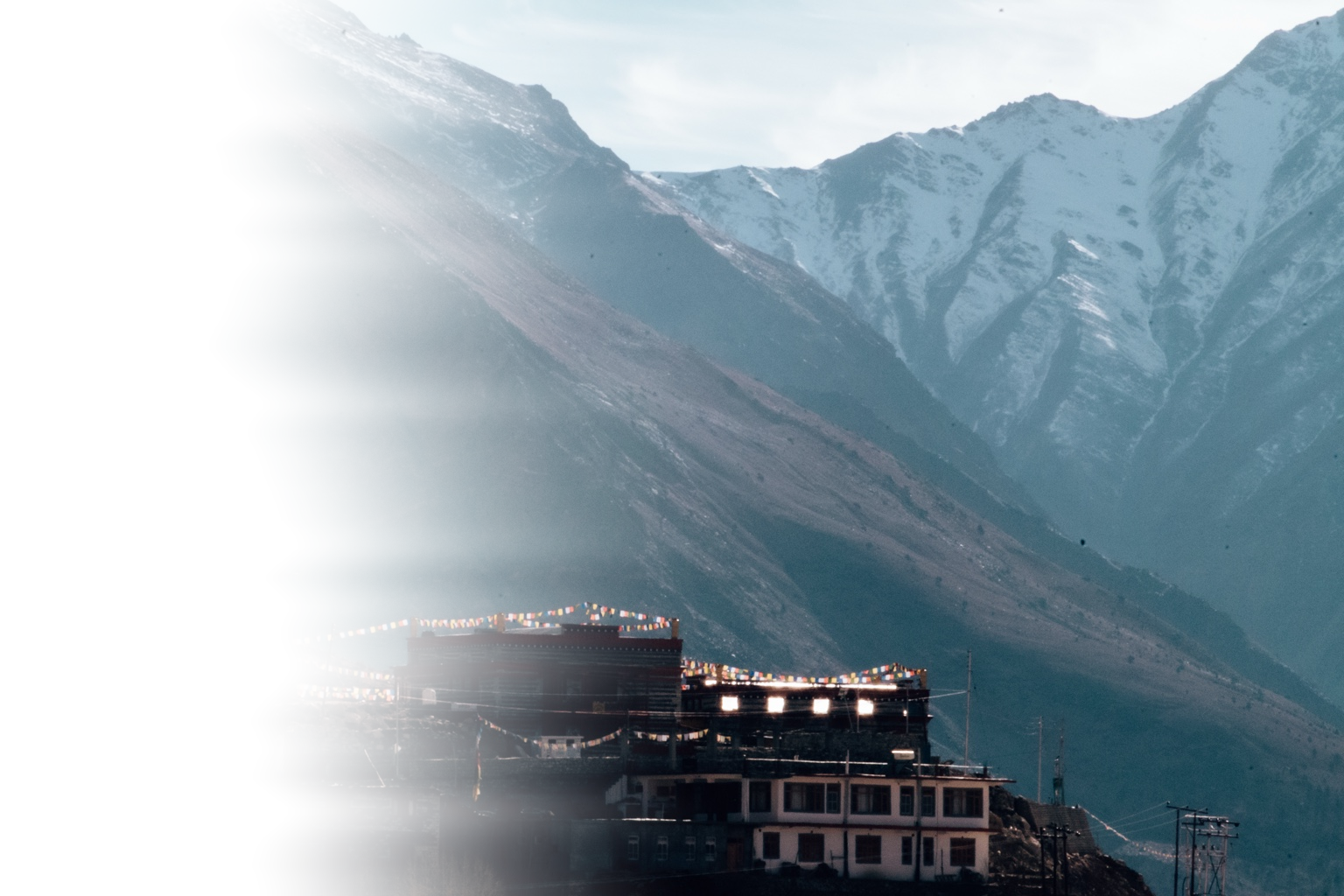
Ecosphere Spiti is one of the most respected organisations in the Himalayas. For over twenty years, they have supported local communities, protected the environment, and trained guides with exceptional altitude and safety skills. They know the valley intimately and work with compassion, competence, and deep respect for their land and the Tibetans.
Traveling with them means experiencing the Spiti in the most authentic and ethical way possible.

our guides :
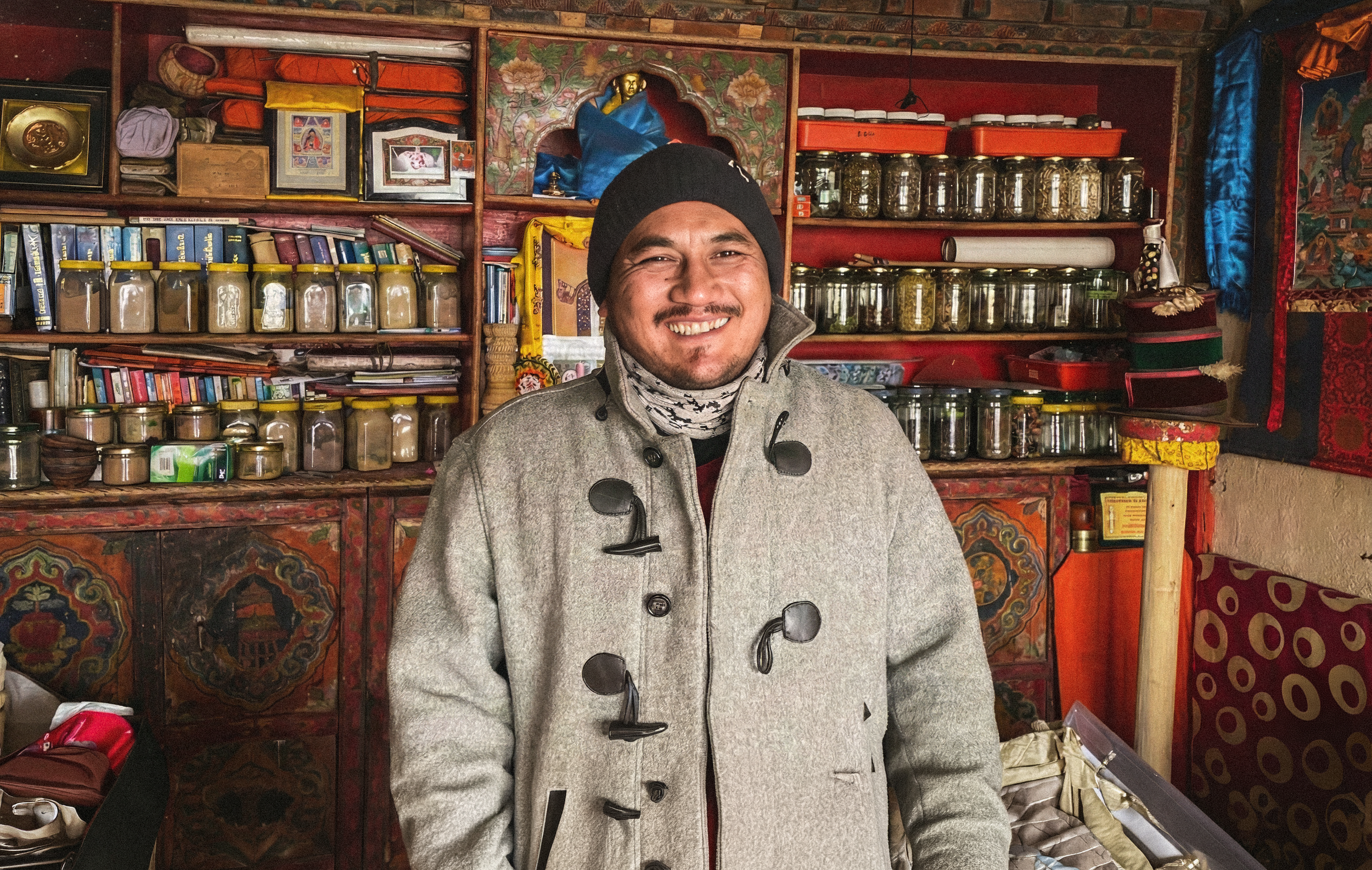
Norbu
In the village of Demul, we met Norbu, a man whose presence is as steady as the mountains. He is an Amchi, a practitioner of an ancestral lineage of healing passed down through countless generations.
When my brother and I spoke to him of our ailments, he opened a manuscript from the 9th century. Watching him trace the ancient Tibetan script to find a remedy felt like watching time collapse. Norbu is a bridge between eras, a healer who understands that medicine is as much about the patient’s spirit and meditation as it is about the herbs he gathers.
He is a rare, warm soul who moves with immense kindness and empathy. But perhaps his most profound medicine is his joy, he seems to live in a state of perpetual light, smiling constantly and laughing with an ease that makes the thin air feel effortless to breathe.
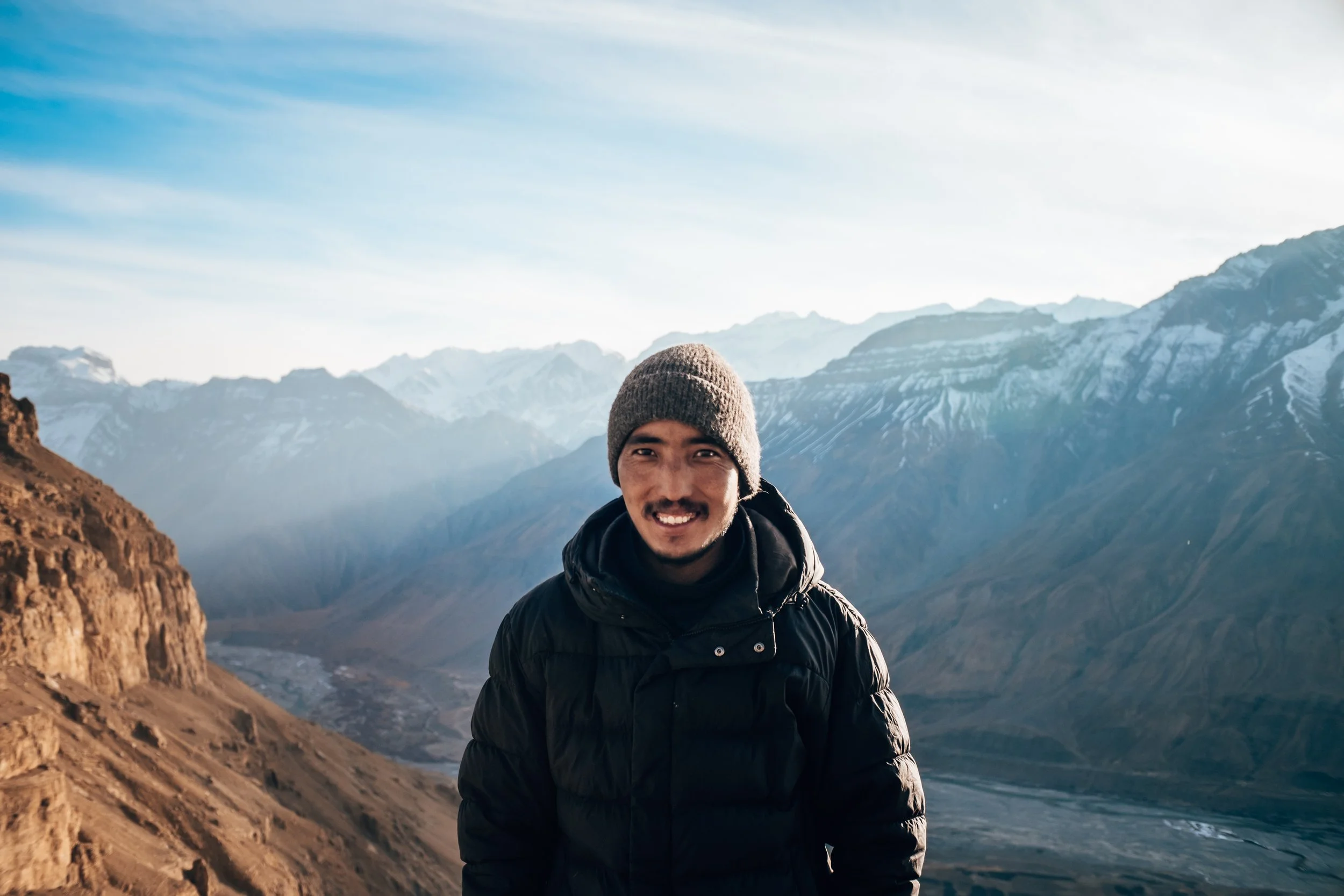
Sonam
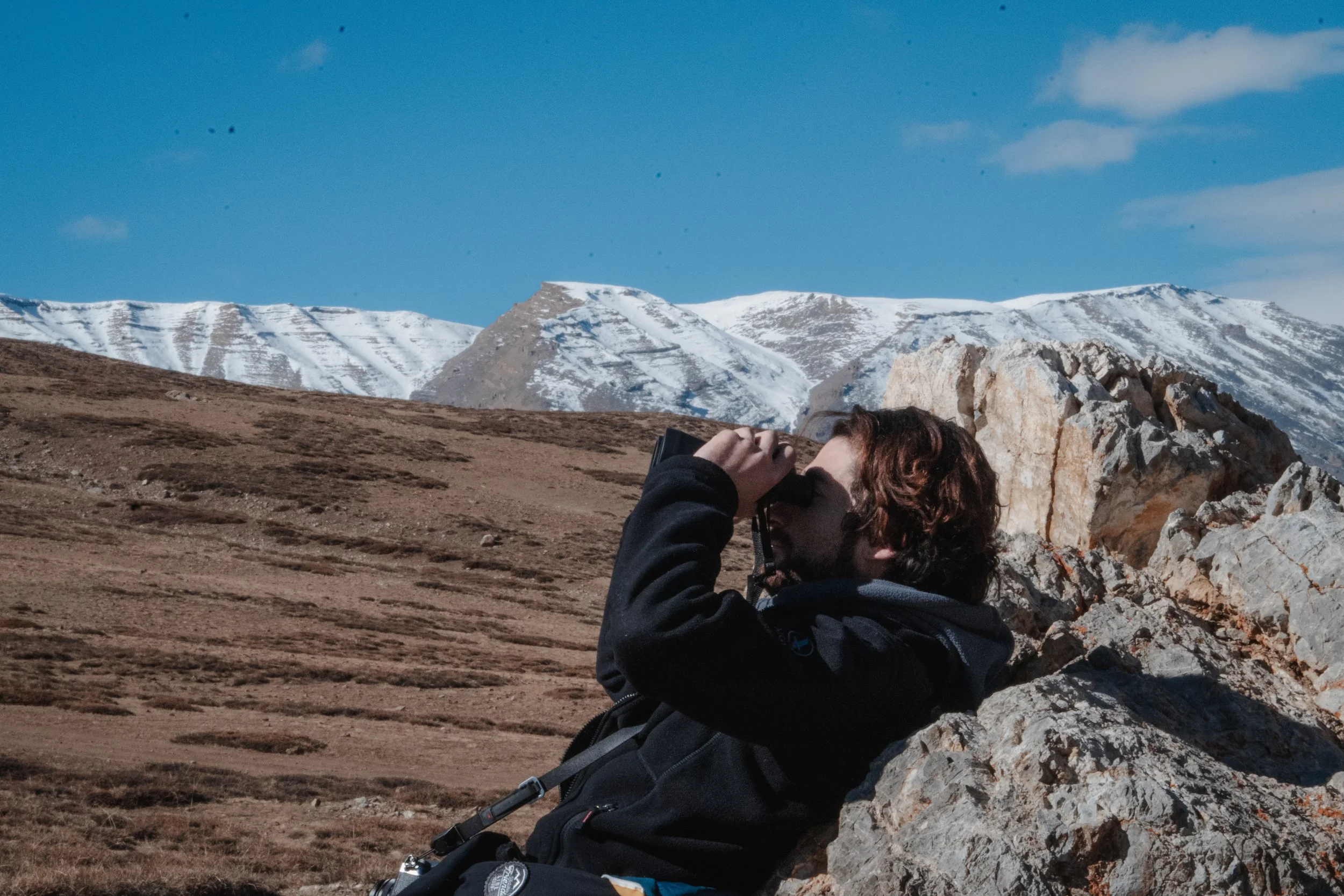
In Demul, a village that feels like the very edge of the world, I met Sonam. He is a man made of the mountains, a wildlife guide who knows every fold and secret of this valley. He speaks of the peaks as an old friends, holding their names and heights in his mind like a sacred map.
But for all his mastery of the high ridges, it’s his gentleness that stays with you. He is a man of deep, mindful attention; he listens always with all of his presence.
I’ll never forget sitting in his home. Knowing him, it’s knowing his family. We sat with them, the room falling into the rhythmic, meditative click of needles as they knitted wool socks. Seeing him there, cradling his one-year-old baby against the backdrop of Spiti, the wild, intimidating mountains felt, for a moment, wonderfully like home.
the contribution
This journey is intentionally small, slow, and carefully held.
The contribution reflects what allows it to exist, and to remain human.
1650€
Departure 15th -26th May & September 2026.
What this contribution sustains :
12 days all-included journey. (Accommodation, local transport, guides, meals, and accompaniment throughout the journey.)
The work of local families, guides and hosts in Spiti.
A slow pace: small group, time, flexibility.
Preparation before departure and accompaniment after return.
What is not included :
Flights to and from India are not included. (This allows each participant to arrive in their own way, at their own rhythm.)
1st night and expenses in Delhi for those arriving a day prior. (Same for the way back.)
Gift purchase to the local Tibetan artists and souvenirs.
About fairness :
We know that financial situations differ. If this journey speaks to you but feels out of reach, you are welcome to write to us. We will always try to find a just and human conversation to figure things out.
Payments in many installments can be made.
Where does the money go?
≈ 1 000 € → Ecosphere Spiti: homestays, meals, local transport, guides, permits, activities in the valley.
≈ 250–300 € → Trains and transfers in India, first and last meals, hotel night in Shimla, hotel night in Raison before the end of program.
≈ 400–450 € → Design and preparation of the journey, group support before and after, on-site guidance, and a small margin for unforeseen costs.
So the 1 650 € is mainly direct costs on the ground and a modest share for the creation and guidance of this retreat. Some of the benefits are re-directed towards humanitarian aid in the valley.
Registrations :
What this contribution sustains :
Each registration begins with a phone call (20 to 30 minutes) to get to know you, understand your expectations and answer your questions.
Payment is made in two installments:
30% upon booking.
The balance two (2) months before departure.
Once your place is confirmed, you will join the support group and receive a list of recommended equipment and insurance. Take the time to see if it's the right moment for you, we'll be happy to discuss it together! To register, simply e-mail us.
FAQ
Is it for me if I come alone?
Yes, absolutely. We even strongly encourage travellers to go alone. Travelling solo allows you to step outside your comfort zone, without staying solely with people you know and could cling to for reassurance.
The goal is also to open yourself up, and there's nothing better than starting from scratch to do that! We also appreciate committed friends. Sometimes, changing together can be beautiful!
Do you have to be athletic?
Not necessarily. The journey is both a psychological and physical reconstruction. The activities are designed as an exercise to re-inhabit your body, as it is, with its strengths and limitations. A month of gentle preparation is recommended for the altitude, with dedicated support, to relearn how to live in harmony with your body.
How do you cope with altitude?
There will be electricity but network will remain very variable depending on the places visited during the day. At the homestay, there will be little to no network at all. We prioritise presence over screens, and that's a good thing! You will have plenty of opportunities to recharge and use your devices to take photos and capture this unforgettable moment. We will also be equipped with solar chargers.
Is there a network/electricity supply?
Tout commence par une idée. Peut-être voulez-vous créer une entreprise. Peut-être voulez-vous donner une nouvelle dimension à un passe-temps. Ou peut-être avez-vous un projet créatif que vous souhaitez partager avec le monde entier. Quel que soit votre cas, la façon dont vous racontez votre histoire en ligne peut faire toute la différence.
Can I have a vegetarian option?
Yes, the cuisine is local. Vegetarian options are available and often preferred. Although meat is sometimes eaten, Spiti cuisine is mainly based on cereals (barley, buckwheat), yak or goat dairy products, and seasonal vegetables. They also eat a lot of Indian food!`
What time should we arrive?
Since the journey starts early on the 15th, at 7:40am in Delhi Train Station, it is advisable to arrive in Delhi the day before (14th) and stay overnight. Or, to arrive overnight on the 14th.
I will also be there, and we can coordinate and prepare together on the preceding day.

Compagnons’ read :
Thank you for taking the time to walk with us for a while.